Boytchie - Sitting with uncomfortability
Interview by Jeriah Fredericks
Photography by Elyvin Niyonzima
When VERVE first started, the vision was for it to be a hip hop magazine, inspired by HYPE and the like. Not long into out tenure Ntsika started branching out into other genres of music, and the focus shifted to independent releases across genres.
I remember telling Ntsika at one point that we should cover art as well - with him firmly telling me that he doesn’t understand visual art. I mean neither did I, but I was keen to give it a shot and see what comes of it.
All this to say that when Boytchie reached out via email, it was a big moment, but a daunting one as well. What do I know about the art world, about neo-expressionism, about any of these big words used to describe his work?
I took the assignment on though, because I’ve learnt over the past couple years that I don’t interview the art, I interview the artist, and the conversation just leads me to better understand the creatives work by learning about it through their lens.
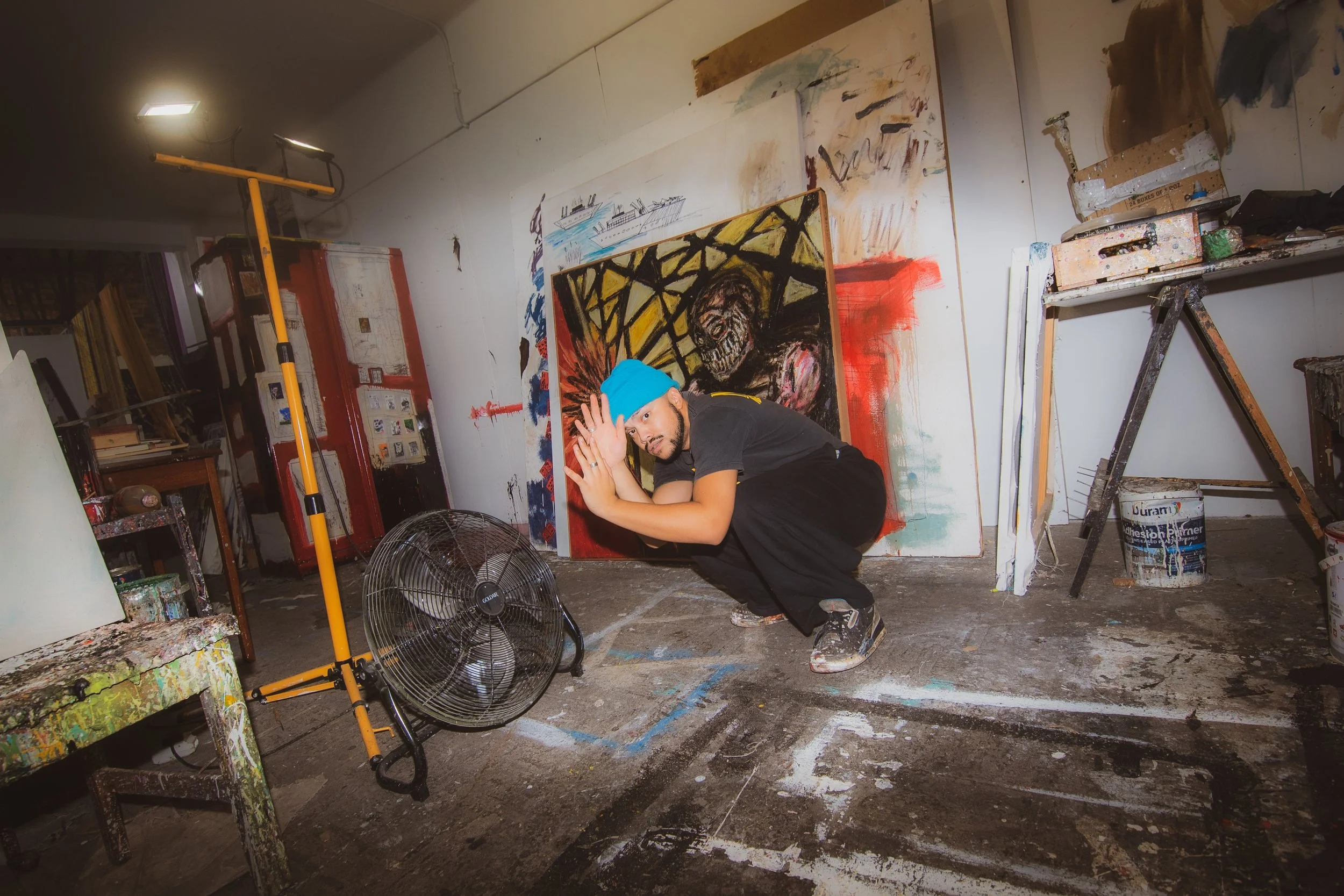
So, I’m going to preempt this conversation by saying that we aren't that deep in the art world, we only recently got into it -
“You really don’t need to add that caveat. I feel like the art world is so elitist and there needs to be a change in that. It doesn't allow people to enter it easily and it keeps these high barriers of entry. I think platforms like what you guys are doing allow people to engage with what’s happening in the art scene and that’s why I reached out to you guys.”
Thanks for that - we do appreciate it. I think let’s start with the question of Who is Boytchie, and how did a kid from ‘Kuila’ end up at Everard Read in Johannesburg?
“(Laughter) Oh wow. Um I guess Boytchie is - well my full name is Phillip Richard Jannecke-Newman, which is a very long name. I also noticed that with my art on gallery walls people read my full name as White, because it’s a very English sounding name as well. Growing up I was always called “boytchie’ coz I was a short kid, the kid who would sneak through the tuck shop line and get to the front, so that’s kind of where it came from. There are obviously all these other connotations, but that also gives context to the work, so that’s why I decided on my artist name.”
“And then you ask about Kuila - yoh. Where do I even begin with that question. I’ve always wanted to make cool art, and as life went on I started taking it more and more seriously. When I was in school my aunties and uncles would always be like “you should study engineering, or be a teacher or something like that”, and when I eventually told them I was gonna study fine art they were like “Ja Finance is a good one!” (laughing)”.
“So there was obviously that barrier of trying to be taken seriously in the community that I grew up in. So I just had to pour myself into it. I’ve always been super serious about it - I made the decision to study art and to do this thing for a living, so I had to put everything into it.”
“I had no life for almost four years, and even after that. I started assisting and working in the production back end of artist studios. From that I started developing new skills, started networking, having some group shows, showing my work here and there. During COVID there was this open call at the Zeitz which I entered and got into and before Everard I worked with a bunch of other galleries as well. I eventually approached Everard and I was a part of this ‘cubicle series’ that they hosted which did really well. I sold some things, after which point they were really interested in my work and asked me to do a solo exhibition…and then ja, I guess now I’m here in Joburg.”
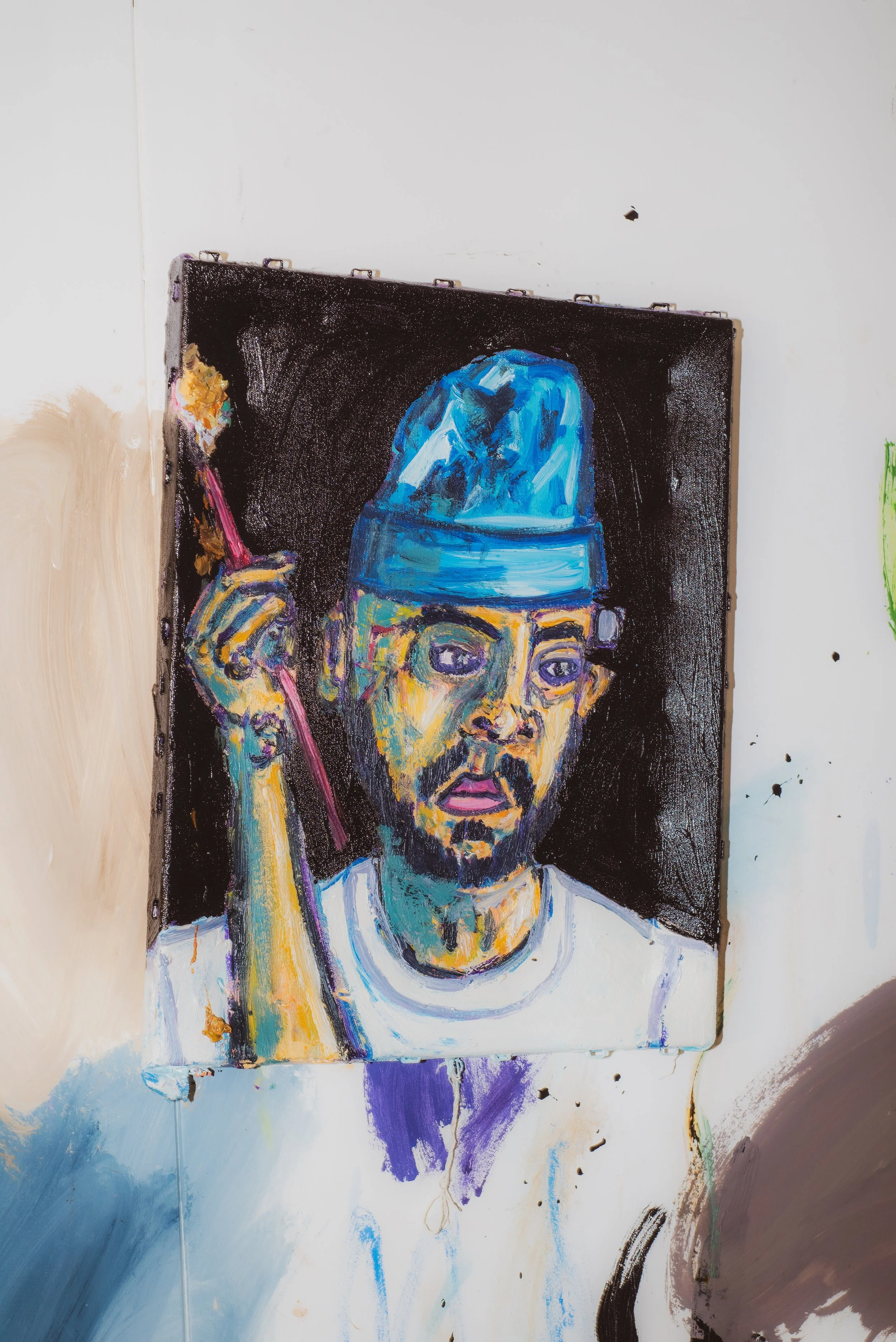
What’s it like moving through these gallery spaces?
“Especially in Cape Town, there are a lot of gatekeepers. People who hold high barriers of entry to access different galleries or whatever, regardless of what industry it is, I noticed at the beginning in order to get my name out there I would have to actively engage with everybody and try to get my name out there. But I realized how exhausting and just unsustainable it was. So I pulled a lot of my energy back and stopped trying to perform. Be it code-switching or something else, I kinda just pulled myself out of it.”
“I find the Cape Town art scene quite white-centred. Yeah, there are people of colour pushing their things and putting their work out there regardless, and those artists are fantastic, but there’s always this lingering question of “am I being exploited?”. I’ve seen so many friends who are working artists in the scene who have been exploited and have been taken advantage of. In that way it’s very difficult to navigate. Because you’re also dependent on these instituitionsto move your “product”.
“So it is a challenge, and it’s something I don't think I fully grasp yet. I’m still learning, I’m still trying to figure out things and trying to get my name out there for sure, but within that I’m trying to build my own connections with people and build my own community.”
In your submission to us you mentioned that “you don’t make comfortable work” - Can you expand upon that? What is the motivation behind the uncomfortability in your work?
“I want people to look at something and almost want to look away but not look away at the same time. So that they’re stuck in this position of “I don't like the thing, but I love it”. I want my work to be some sort of confrontation with the people who are viewing it. Or force them to walk around an object. Or if there’s something on the wall, I want them to examine the textures or examine the layers of the work.”
“In a literal aspect I just don’t think work should be about nothing – it should have something to say. And I think that's what sometimes makes it uncomfortable for people, if artists are expressing or reflecting on the world around them, sometimes people feel uncomfortable by that reflection – It’s too stark, it's too visceral. I want my work to shout and not just be hanging on the walls in a corner.”
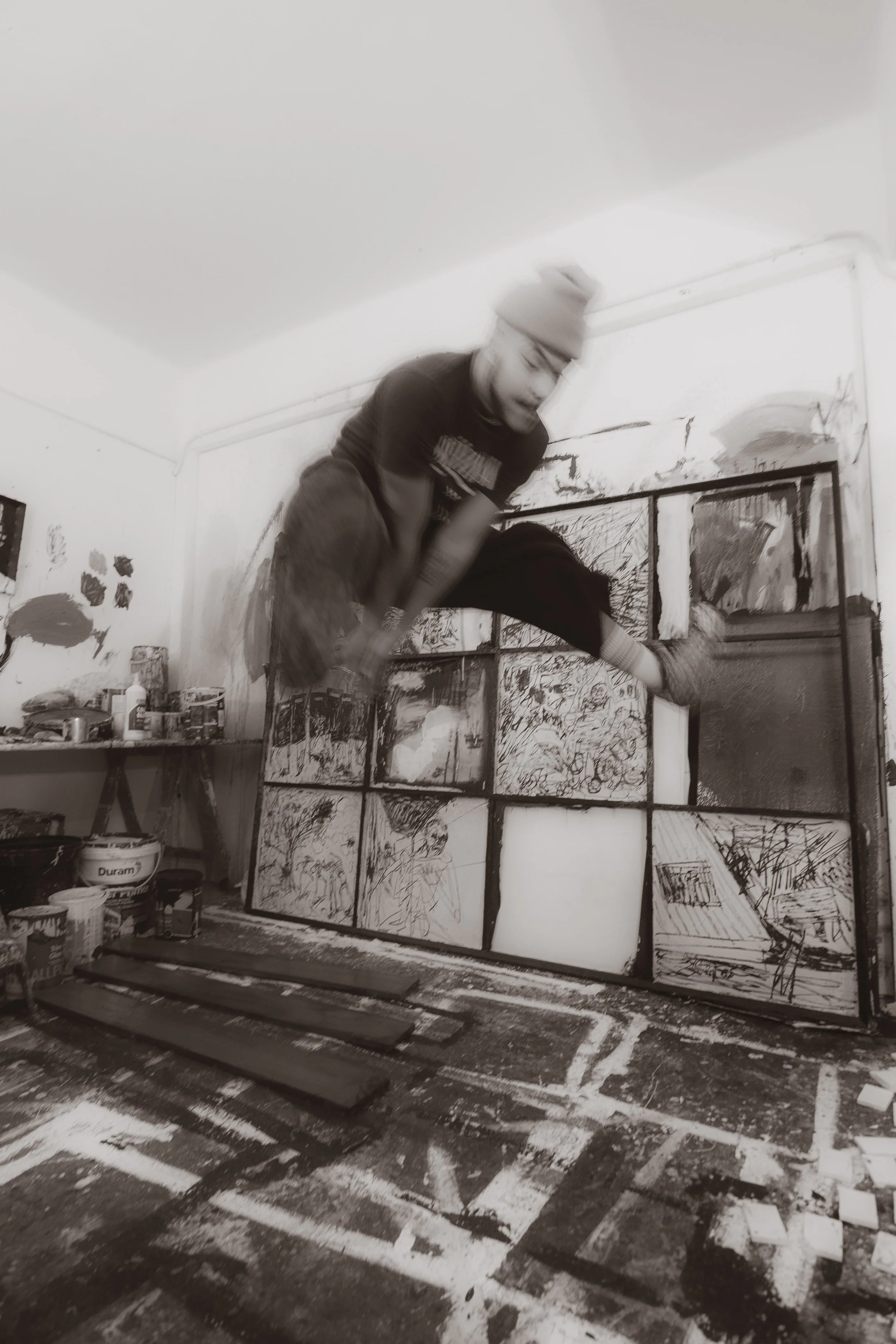
While we’re talking about the visceral nature of your work, do you think that part of that is influenced by your identity as a coloured person?
“To an extent for sure. I don’t think my work right now is actively speaking about coloured identity - I’ve always wanted to speak on that directly, and I’ve made something back in varsity but never in a gallery space, because talking about coloured history is such a complex puzzle to unravel. But I think just by virtue of not knowing where exactly you come from or what makes you up as a person, there is this unsettledness or restlessness in your soul. And I think that’s something I definitely carry with me.”
Before we get to the new exhibition, can you tell me a bit more about the ‘KASH OUT’ series?
“I started the KASH OUT series in 2024. I wanted to make something or flesh out an expansive thing that speaks to hustle culture, and to greed and capitalism. At the time when I started, I was literally trapped in that - what was on my mind was this determination to make it within the art space and to have people know that’s what I was doing, while at the same time trying to figure out my aesthetic and my style and what this body of work looks like.”
“So I didn't have a fixed visual identity at the time, but I was still intent on putting my work out there and trying to figure it out. This is now the fourth year of the series, and it’s carried me this far - it paid the bills which is nice. I think it’s also grown in the sense that there has been so much more conflict globally so what started as just a comment on hustle culture and the system of capitalism, and how moving through the system instills greed, has shifted focus to larger things like how these systems work and how violence is to control people.”
“Neo-colonialism, resource extraction, all these things sort of got piled into the work I was making. I started looking a lot at the global political situation which has filtered down to a local level, and the relationship of macro- to microeconomics and events.”
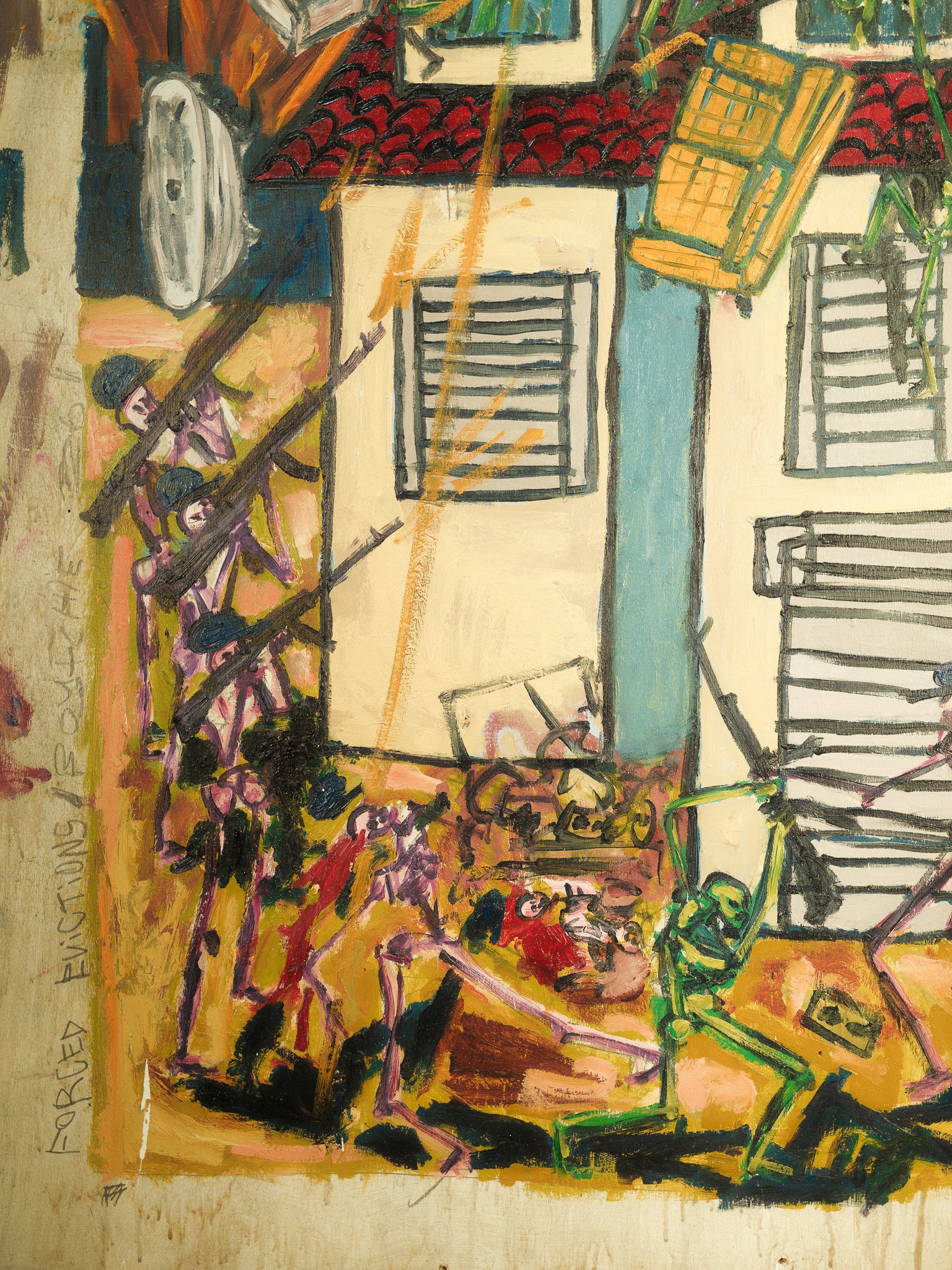
So, with ‘Righteous Orders’ – it's definitely very visceral while also giving you that feeling of wanting to pull away but also wanting to go closer and examine the finer details of the work. How long did the exhibition take you to produce?
“It was like 3 months – just me locked in the studio producing art. The exhibition is a curated down selection of that period in studio.”
Was that a new process for you, working at that rate?
“I think I’ve always overworked myself, but what shifted this time was that I had a residency period at breakroom. where I was producing a lot of abstract work. It forced me to work very quickly and get ideas out, and not worry about a subject or a figure or a background, all I was considering was colour or line. So from that, coming back to something I had been working on for the past made me kind of want to change things and present something new.”
“And in that wanting to do something new I almost wanted to produce at an excessive speed and get out as many images as possible in the short time that I had. All the things that I had been thinking about and wanting to make, when it comes to tying off loose ends in the KASH OUT series, I managed to do that. That was the goal.”
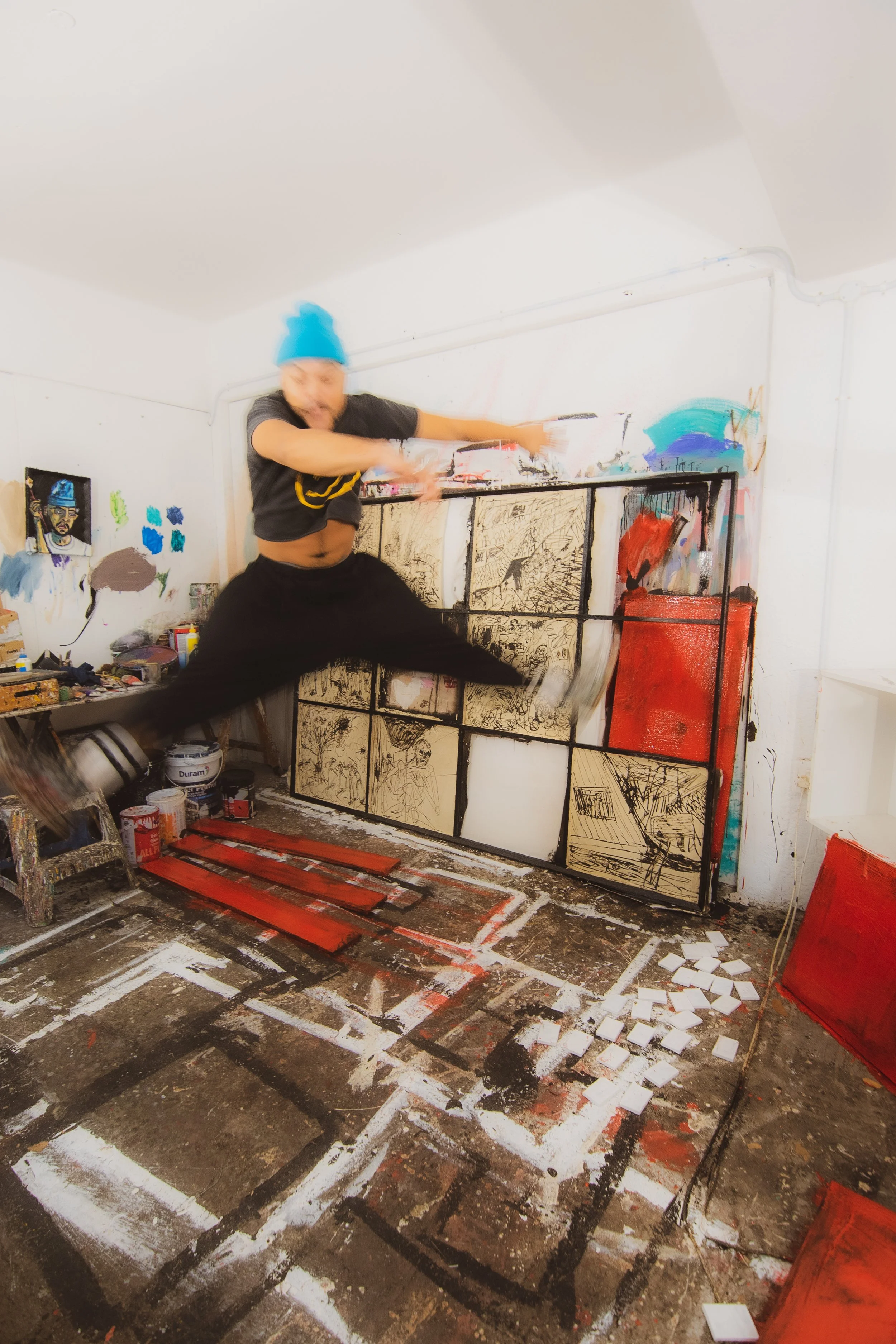
Did producing work at such a pace get you into a flow state creatively?
“Yes, definitely.”
So then are there works in this exhibition that wouldn’t have been there if you had had more time? Did the pace of production lower your inhibitions at all?
“I don’t think so, no.”
“The goal was always to jump from one painting to another, then going back to an old one, then moving on to something else, then making drawings… like a dance but almost not a dance…like very fast paced Jazz - that’s what it feels like to me.”
Something that stood out to me about this work was that some of your paintings have frames with added detail on the outside of the frame as well, and the one that stood out to me was the fridge. Can you tell me more about the dimensionality of that work?
“I like the idea of being cross-discipline. I started out this art thing by drawing. I’d always be drawing - if it was charcoal, pen, koki, scratching the desk, that was what I did. From that I taught myself slowly how to paint, and from that into sculpture. So, there’s this translation between things in the work that I make. The paintings that I make feel like sculptures, the drawings that I draw feel like paintings, the sculptures feel like paintings and drawing at the same time.”
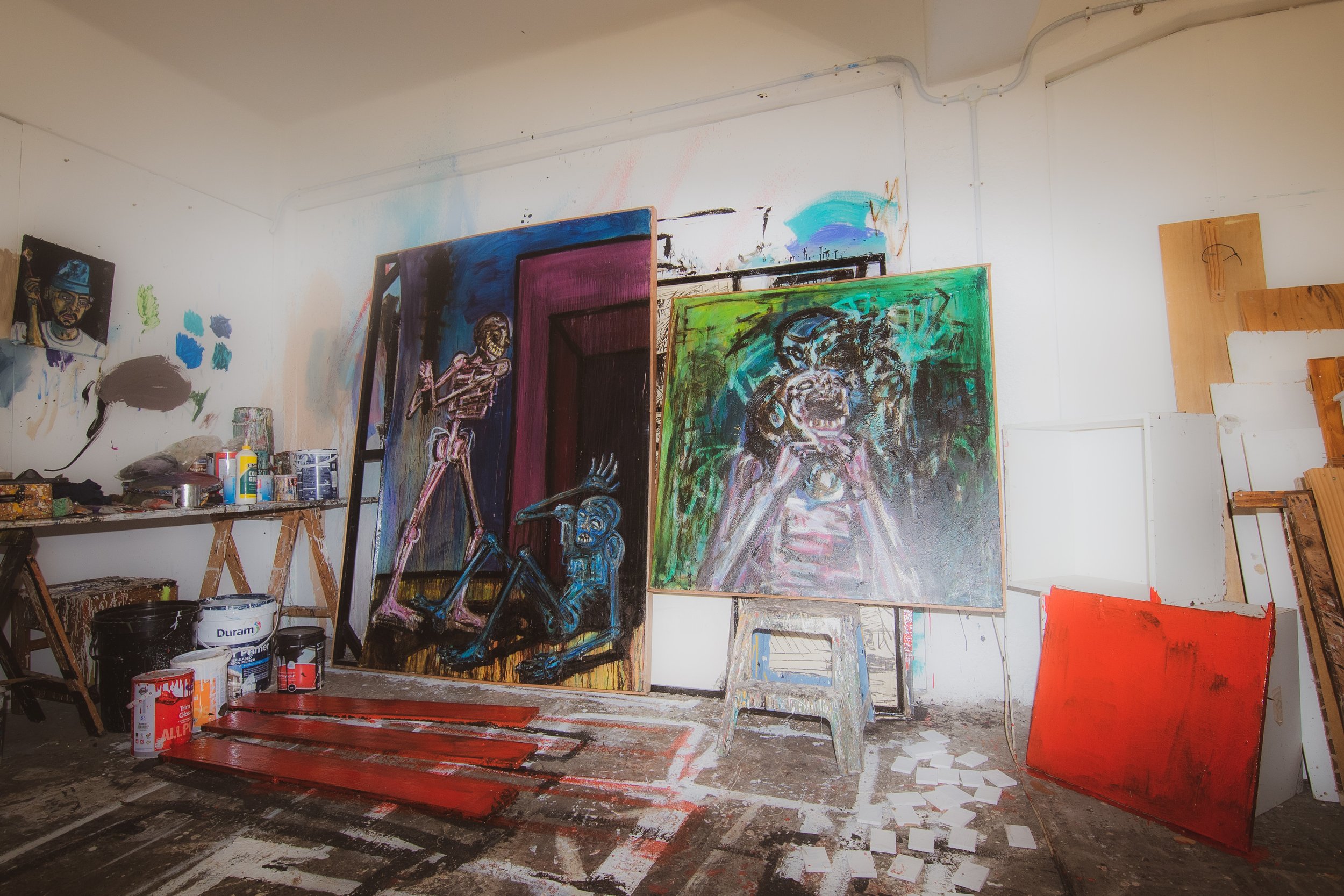
Do you like playing with textures a lot in your work?
“Definitely. Textures are like juice for your eyes. Textures are juicy.”
(laughing) I won't lie, I love that.
“When you look at a work with texture it intrigues you, and it pulls you into the work. I think it’s beautiful and I think that’s what keeps something engaging for people; outisde of meaning.”
It’s all very vivid - I feel like the work is kind of fighting with itself and shouting at itself, and it plays into the messaging behind it. It really calls your attention and holds it. So, is this the final chapter in the KASH OUT series?
“No, but I’ve already finished the series. This is kind of the rollout of the last of the series now. I can step back and start thinking and considering what I want to do next. There’s a bunch of things that I’m thinking about - paintings and sculptures. I’m not too sure yet but they obviously need time to be fleshed out and sketched and all. But yeah, KASH OUT is done. Maybe in 20 years or so I can come back to it, but for now I’m done.”
“I like seeing art in correlation to albums, how musicians have pockets of sound. It’s so important, even with visual art, that you grow as a person. You change, and how you make art changes. The goal that I had for KASH OUT was to encapsulate a chapter of sorts and then move onto a new book.”
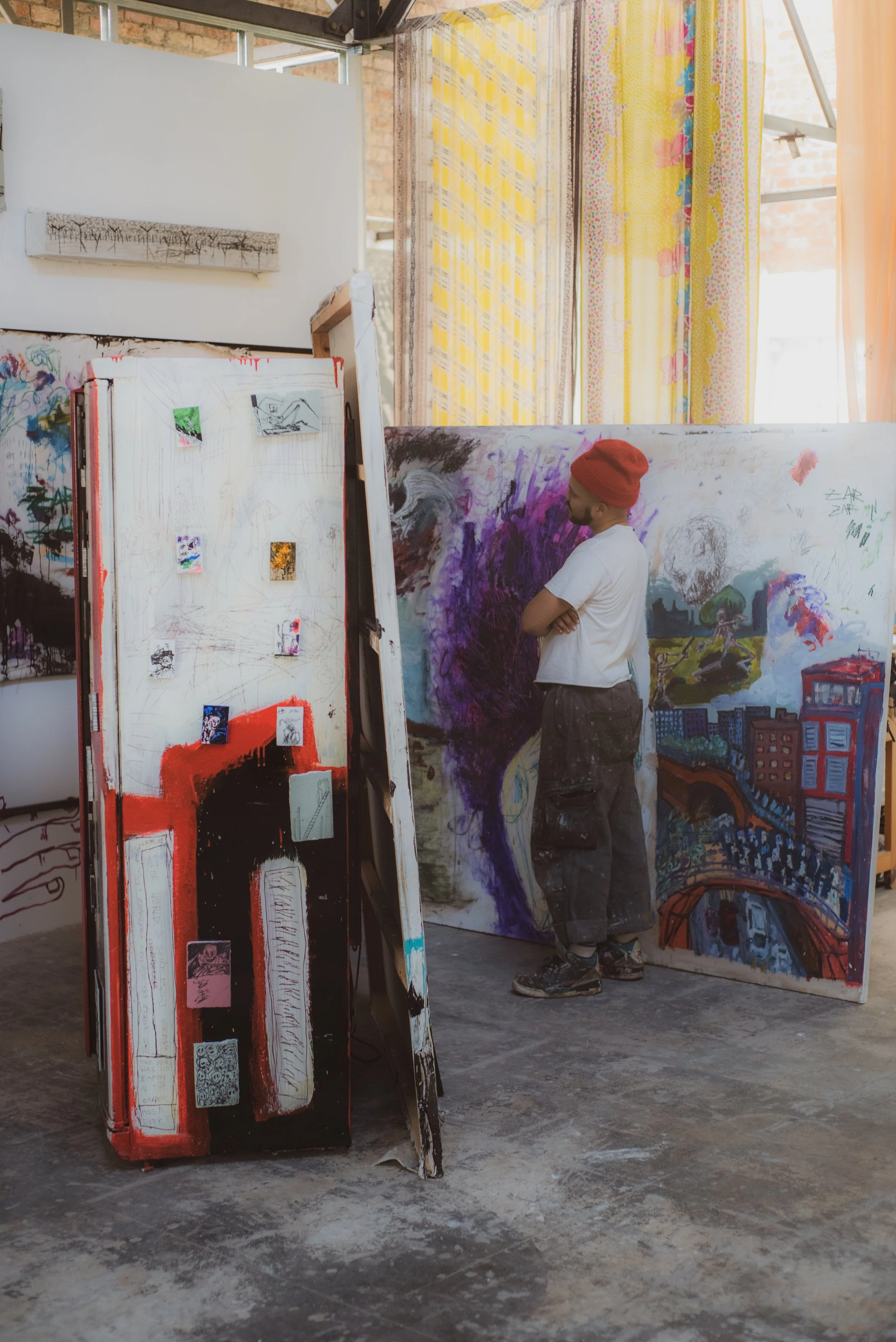
Is it hard to move into a new phase of your artistry?
“I think so, yeah. Because you’re dealing with galleries, your audience, and collectors… In most cases people think you should do the same thing and have your aesthetic be your permanent style. But why keep that style or that way of working forever?”
“You kind of have to guide your audience into whatever you want to do next, so that’s something I’ve been doing - adding more abstract work. The way I’ve been working for this period has been a transition, slowly guiding people to expect other things, but without making it too jarring.”
Your art is covering very current issues - the kind of topics that we all see happening around us but we all kind of ignore them and carry on with our lives while things progressively worsen. Is there any specific conversation that you want your exhibition to start?
“I think it’s definitely about wanting people to think more critically about the world, whether it’s global or local. And to be more observant about the systems which we move in and how the people in power try to almost control you in a way. How they get you to believe that whatever they are saying is the right thing, when oftentimes they say something but they only care about money. And for people to have more empathy for one another.”
As an artist, or from an artist's perspective, how better can we learn to sit with things? I mean we’re living in this late stage of social media which is basically an attention economy, so when engaging in work like yours, or any type of work really, how better can we actually sit with it and take it with us going forward?
“Sho. I think it depends what the work is about. If the work is about black empowerment it's about internalising that message and believing that you, if you are a black person, are powerful. With work like mine, I don’t know if it’s necessarily that people need to go out and do something - I mean we do though.”
“Obviously, everyone is going to look at things with their own subjectivity and their own context, but if we can look at things and start to put connections together, and spark conversations about what change looks like - that’s a start.”
I think that’s what we at VERVE are trying to do. Having conversations with artists and expanding on their work kind of gives me a new viewpoint and I end up looking at my life a bit differently. Yes, we’re trying to contextualise your work and tell your story, but also, we want our readers to think more about the art, and the culture, and what they’re doing in the space that they are in. And I guess to sit with things.
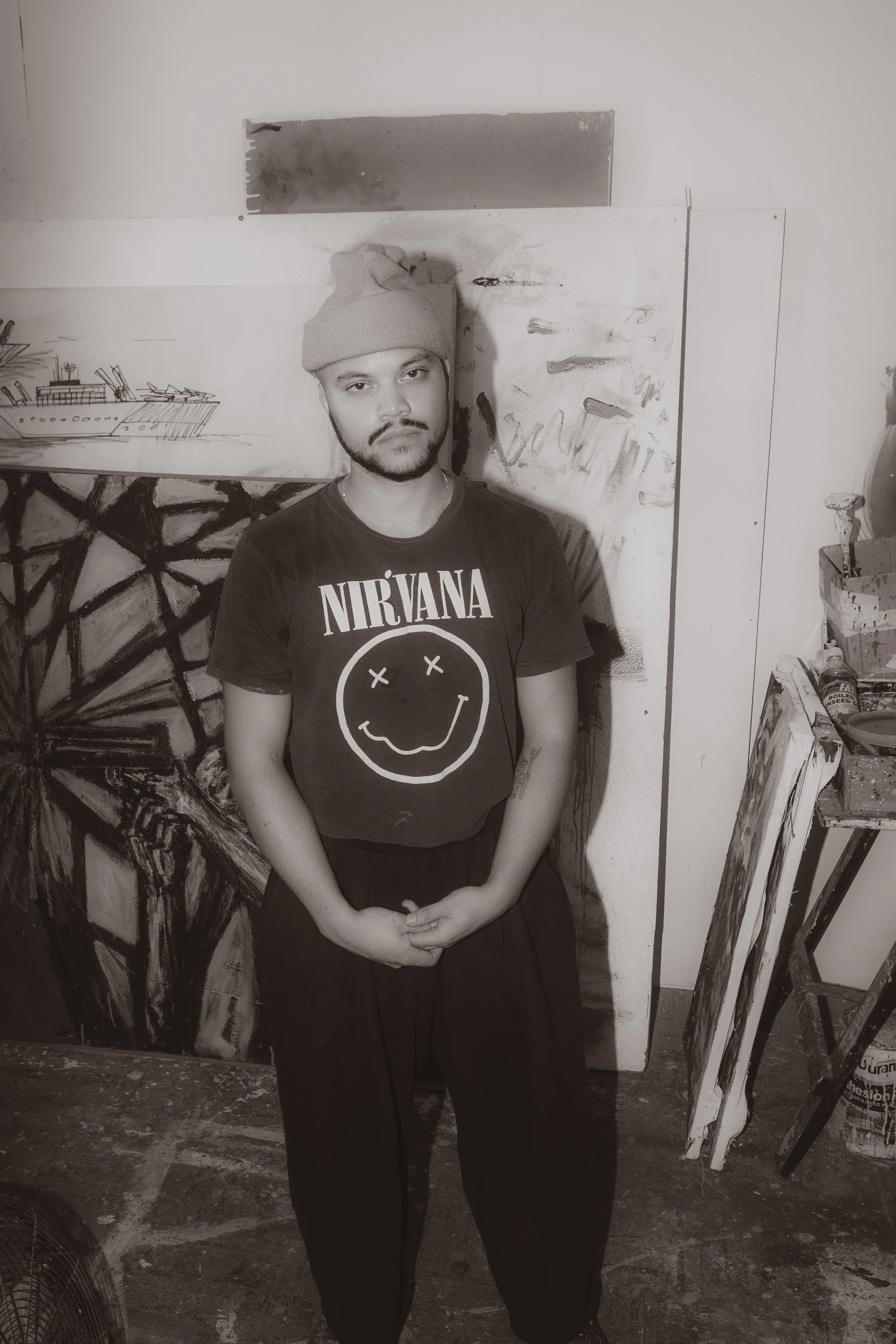
The part I love the most about this work is challenging myself with artists and mediums outside of my wheelhouse.
Had I encountered Boytchie’s work at a First Thursday exhibition I probably would have walked past it without much examination. But the more I expose myself to things I ‘don’t understand’, the more I learn to understand them, and the wider my creative lexicon grows.
And at the end of the day that’s exactly what we set out to do here at VERVE - to expand our (and your) awareness of the cultural landscape of the city.
So go out there and try something new, engage with art that you wouldn’t have before, go to an event which might not immediately appeal to you.
Sit with that uncomfortability and ask yourself why it’s challenging you.
Who knows what waits for you if you manage to answer that question.