A Rebel Touch of Country
Durban July Young Designers Reimagine Textile Heritage
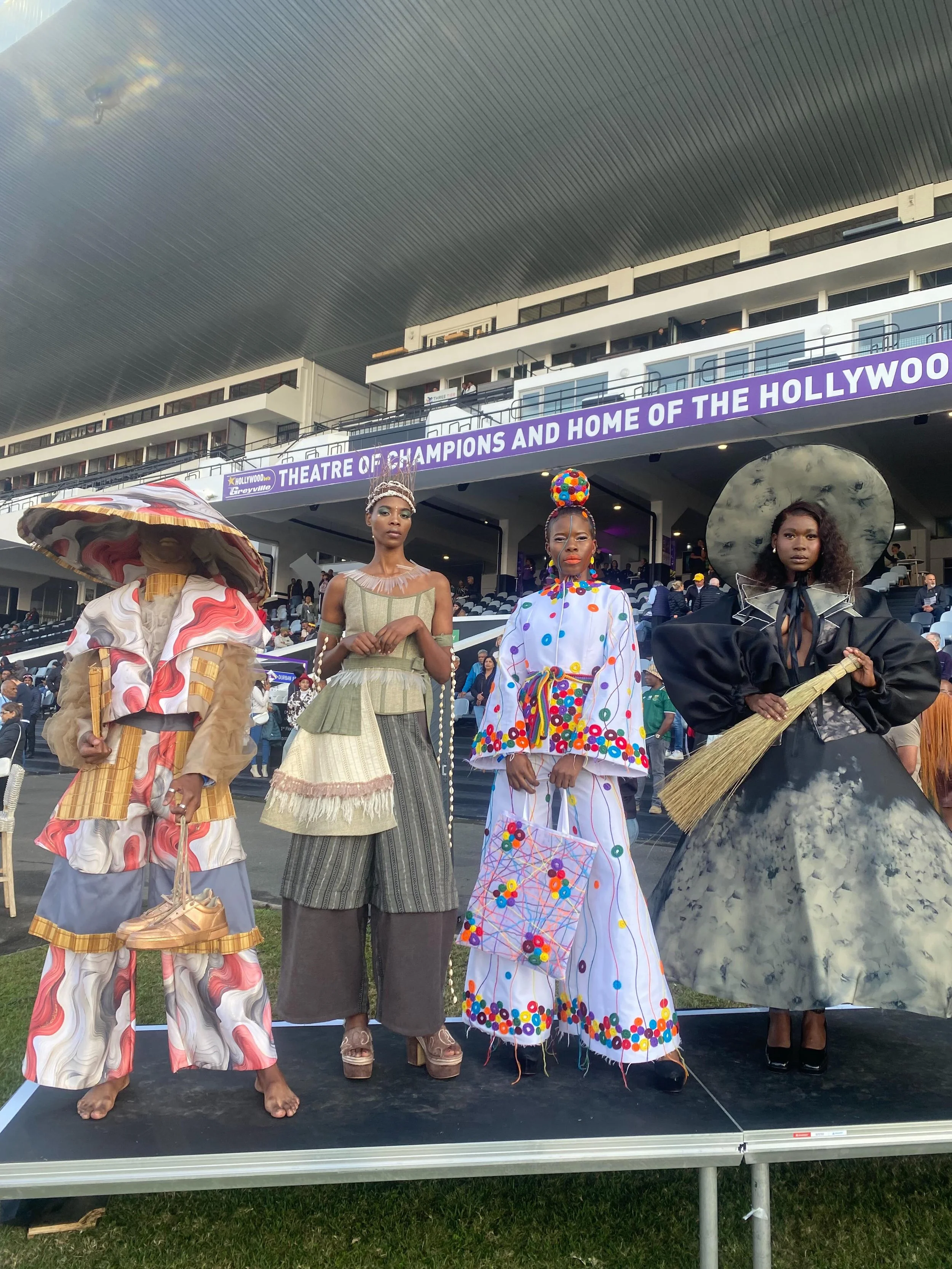
Image courtesy of @thato_selekane
Article by Caitlin Honeywell
Every year on the first Saturday of July, Durban comes alive for the season’s premier social event: the Durban July. Known for the glamour and gambling, there is another story in the race for the headlines. The Hollywoodbets Durban July Young Designer Award continues to upstage the horses’ silks as the main attraction. The festivities are tailored to a theme that changes every year. Despite the eyebrows that might be raised at the clumsily named « country allure » theme (sigh, the beloved), this year offered fresh interpretations of a perhaps stale theme that is a testament to the wealth of talent and innovation possessed by South Africa’s next generation.
Organised by Race Coast and presented by Metro FM, the young designers programme aims to develop promising careers in fashion. While the cash prizes and bursary are persuasive, the TV, media, and social media attention this event receives is unparalleled. Exposure is crucial for emerging designers to reach potential clients, and the July has a reputation for discovering talent.
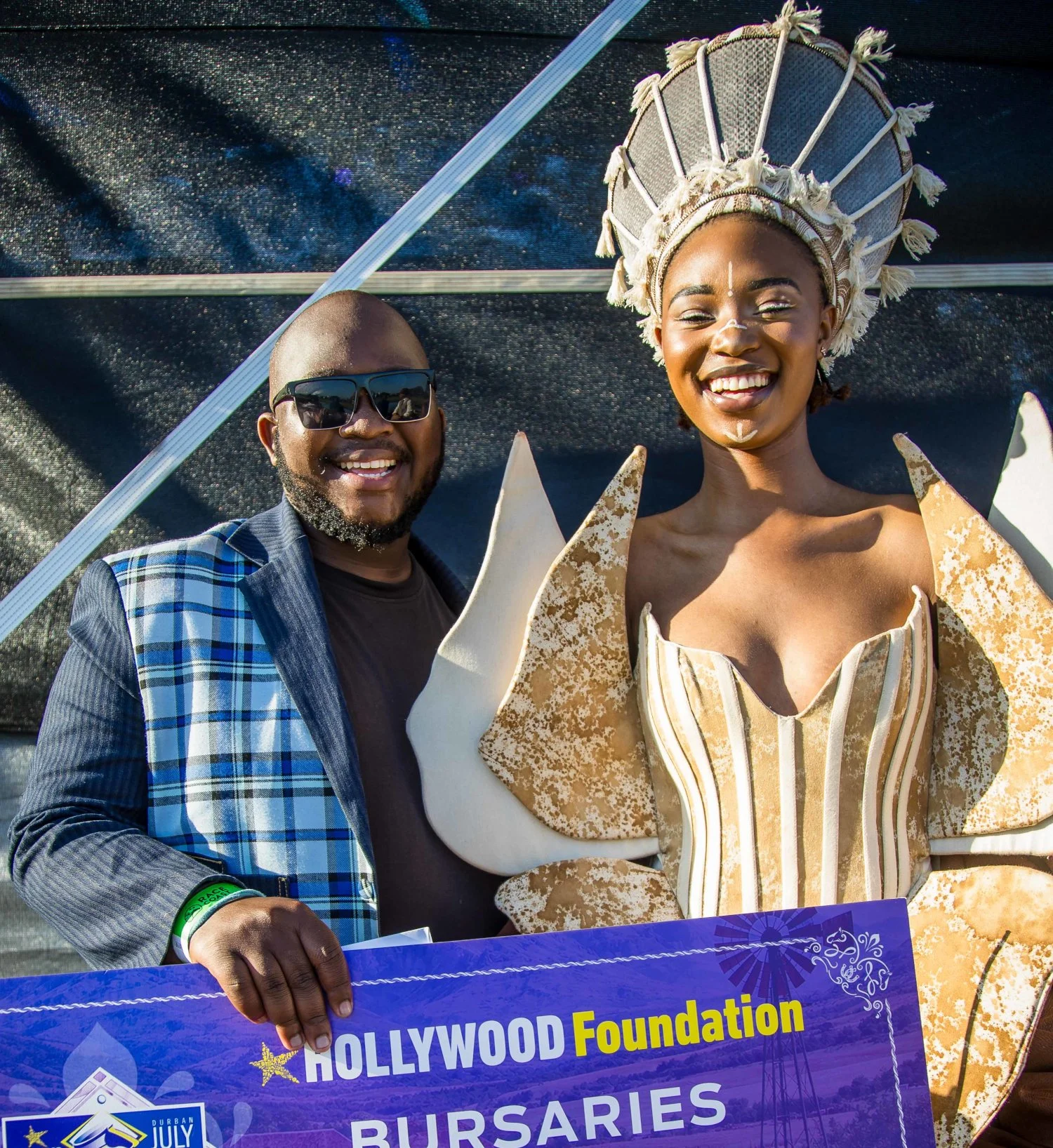
Winning Designer Mlungisi Ndlovu and model Snegugu Mabizela // Image courtesy of Hollywood Bets
This year’s winner is Mlungisi Ndlovu, hailing from Greytown and founder of Unchosen (Pty) Ltd. His design “A Rebel Touch of Country" encapsulates the spirit of Durban’s young designers. Ndlovu evokes iconic Nguni textile tradition and taps into a bold contemporary language that is both regal and grounded. The sharpness of the structural elegance displays his cutting-edge artistry, which is underpinned by experimentation:
“My process always starts with research and sketching, then I experiment with patterns, draping, and different construction techniques until the design feels right. There was a lot of trial and error, but that's my favourite part because it allows the garment to evolve naturally. I wanted this piece to feel artistic while still showcasing strong craftsmanship and attention to detail.”
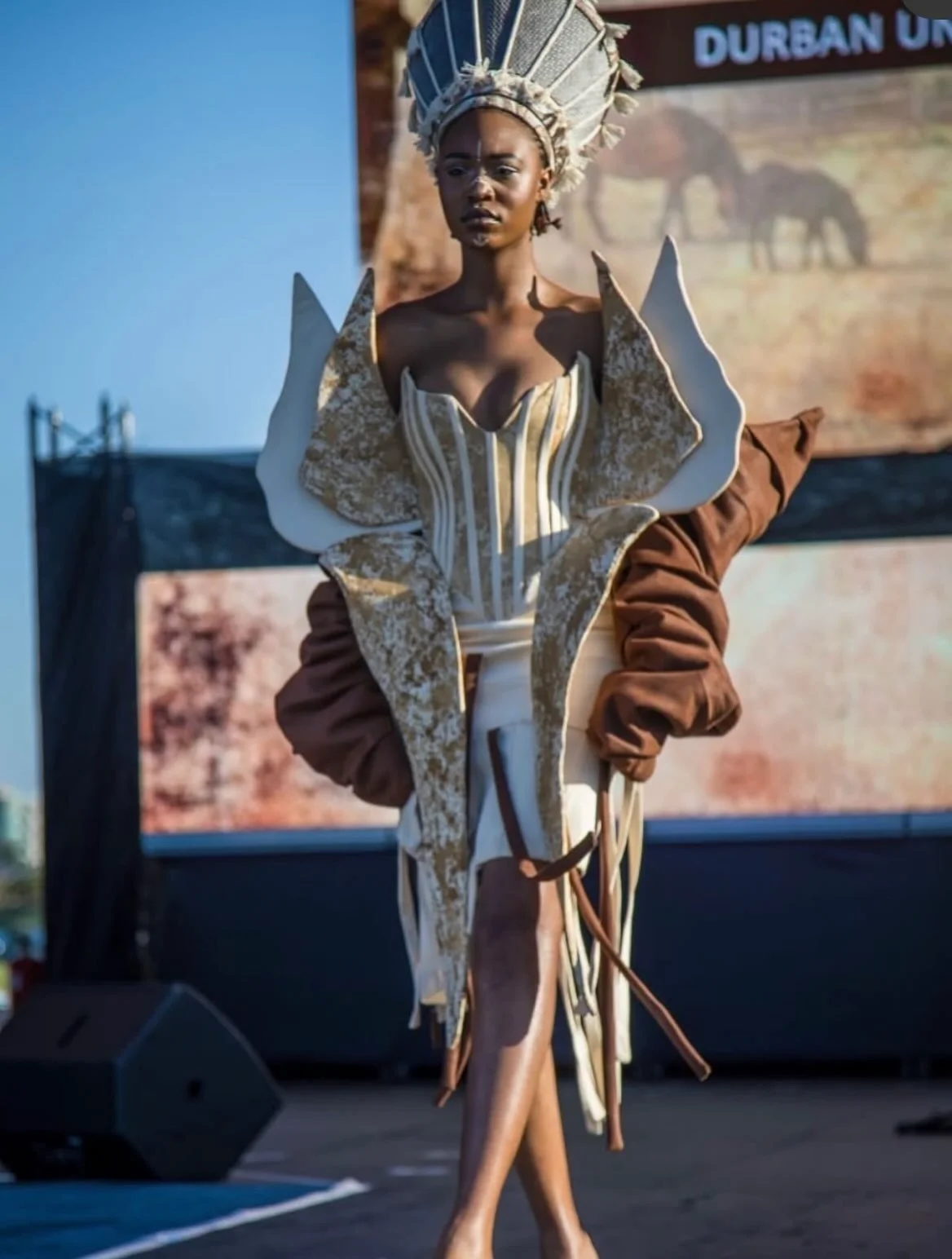
Snegugu Mabizela modelling Mlungisi’s winning design // Image courtesy of @snegugu_mabizela
In this process, he discovered the cowhide-like effect produced by treating the fabric with coffee, making this piece a true original. His story literally weaves together tradition and innovation in working with familiar ceremonial fabric in a new construction and translating the intricacy of beadwork into an attention to detail in the finishings. Ndlovu describes the thought process as follows:
“I worked primarily with uMbhaco because I wanted to celebrate a fabric that carries deep cultural significance while exploring its place within contemporary couture. I paired it with sofa leather fabric on the sleeves to introduce contrast in texture and structure, allowing the materials to complement one another while creating a bold visual language. Through textile manipulation I wanted the fabric itself to become as expressive as the silhouette.”
This unconventional combination speaks both to a resilient pride and a multiplicity of how identity is expressed for the next generation. Here’s the vision in his own words:
“The story behind the design is one of identity, transformation and cultural pride. It reflects the idea that heritage is not something fixed in time but something that can evolve while remaining authentic. My hope is that the audience sees a celebration of African craftsmanship and tradition presented through a contemporary lens, proving that innovation and culture can exist in harmony as high fashion”
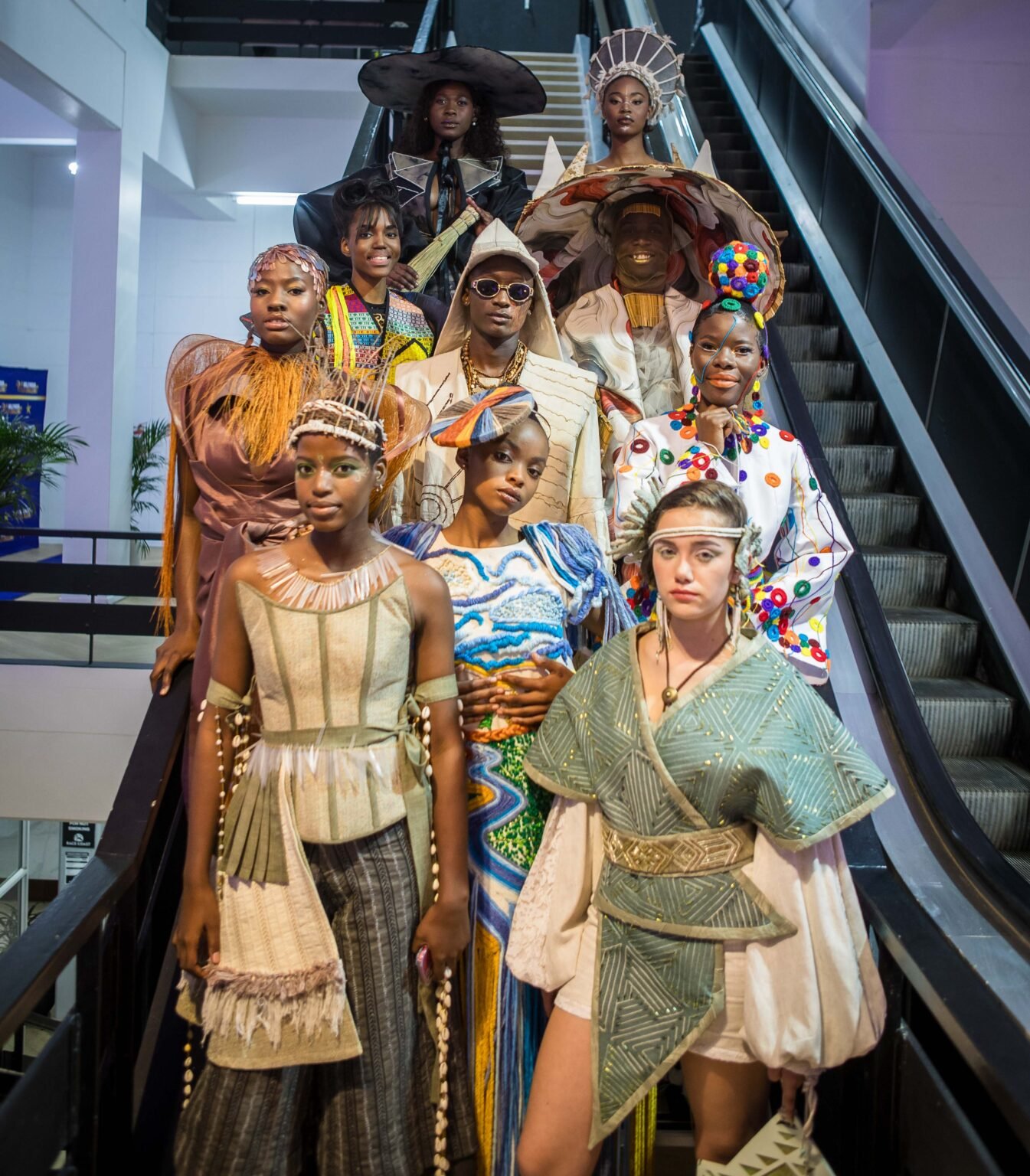
Image by Graham Daniels
In this way, fashion is a concrete way to celebrate heritage as something living with a profound capacity to respond to the present moment. Where Ndlovu’s vision was to push silhouettes, he equally pushes the boundaries of what fashion can do— not just in telling a story but in finding concrete solutions through fashion to improve the quality of life:
“I’ve got a brand “Unchosen” which is all about clothes that adapt with people. We don’t just make high fashion. We want to make change and make lives easier and better for people living with limb loss and mobility impairments by making adaptive wear that is both functional and stylish and less clinical”
In contrast to the loud and bold runway shows, his overall vision reveals a quiet leadership. “Unchosen” reaches out to welfare institutions and hospitals. Ndlovu aims to assist nurses in caring for elderly patients by altering clothes to make it easier to dress and undress with dignity. It is my hope that the prestige of the July is redirected to more of these brands. Ndlovu’s story as the winning designer amplifies the importance of supporting local entrepreneurs, who often drive social change in communities. This further underlines the role incubators play in making possible and sustaining these sartorial stories of change.
Model Monique Mukendi and designer Dalisu Vumase // Image courtesy of @igodaincubator_
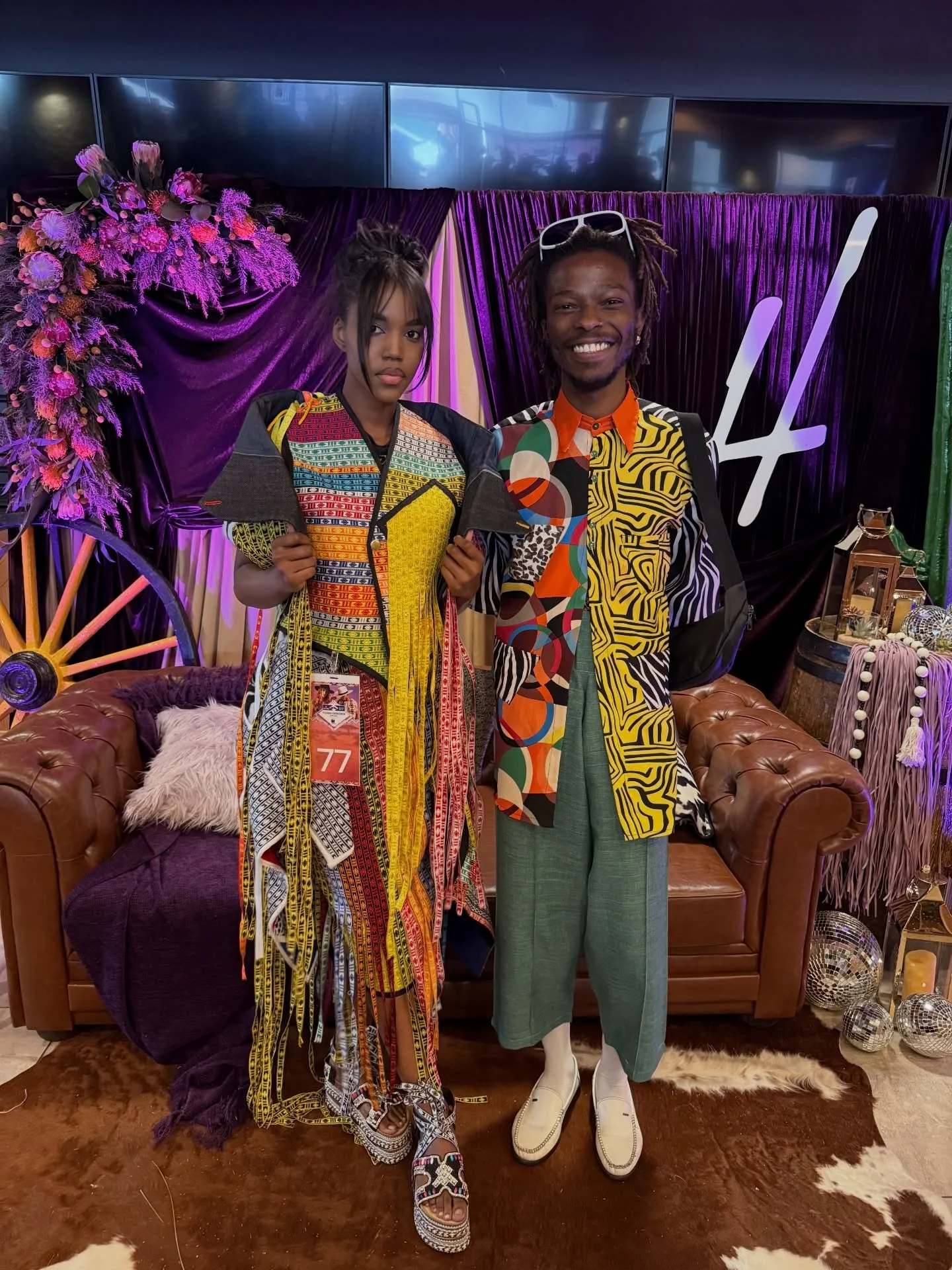
Dalisu Vumase took second place. The bright colours of this design stand out as impactful and original. It also indexes the inspiration of uMblaselo, the multicolour patchwork-style outfits that are instantly recognised as Zulu textile heritage. The meticulous stitching of measuring tapes onto twill to form the fabric further celebrates the history of uMblaselo as a practical solution to make clothes last longer by patching them up. Besides the colours and pattern, the overall vibrance is created by the dynamic long, loosely hanging strips that add movement. Like the winner, the design returns to the textile itself, thus celebrating the process of garment construction. The innovative design builds upon a heritage of craftsmanship and resourcefulness. This attitude is reflected in Vumase’s approach to fashion as an entrepreneurial venture that creates employment in his hometown of Esikhawini.
Designer Thato Selekane and model Lungelo Mthimkhulu // Image courtesy of Hollywood Bets
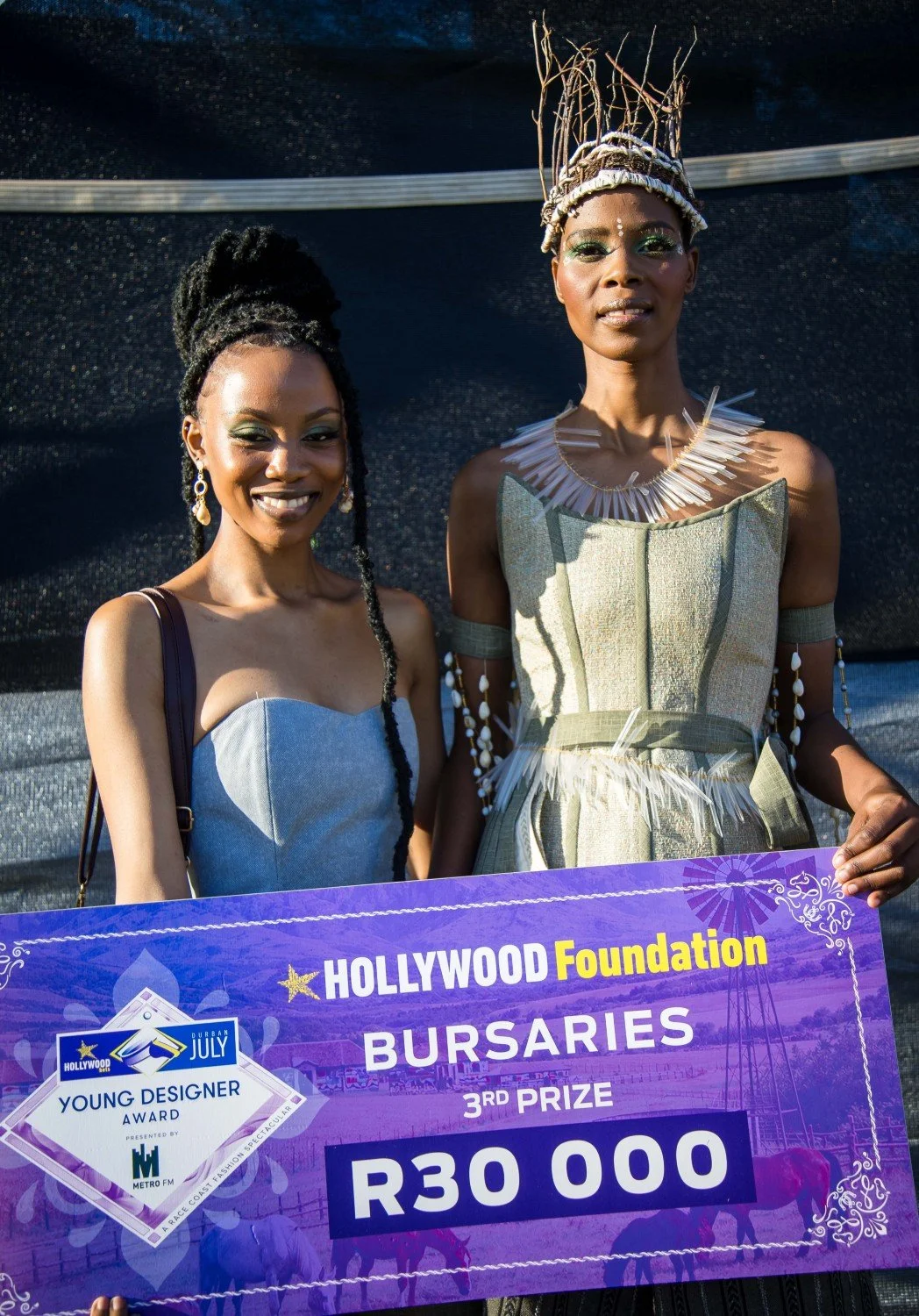
Finally, Thato Selekane came in third with “Mabu a Utlwa” ("The Soil Hears"), which draws from the iconography of SePedi spirituality, a nod to her roots in Springs, Gauteng. Like her fellow DUT student Ndlovu, her design reimagines the form heritage takes for the next generation. She tells Rakesh Ramdhin from IOL: "My design challenges old stereotypes by presenting our traditions as something innovative and powerful." We see the imprints of Limpopo’s majestic landscape in drama of the earthy tones, and structured corset, influenced by traditional SePedi couture, finished with dangling strings of cowrie shells (Kgapetla) symbolising prosperity and abundance in harvest.
The thick, durable fabrics are able to hold unusual shapes that add interest for the eye and also speaks to natural wealth. “Mabu a Utlwa” offers an invaluable commentary on the way a sustainable relationship to the land is ingrained in the historic fabric of African fashion.
Perhaps evoking the colour of grey river beads, the neutral tones further serve to amplify the impact of the textures and futuristic use of lines. The combination of vertical lines in the visible boning, with diagonal strips on the skirt flap and horizontal wasteband, as well as the fringes and tassels, reveal a skilled thoughtful simplicity in the design of this outfit, giving it an overarching air of assured confidence. Selekane embraces a fluidity in heritage, through high fashion structural work paired with elements of personal cultural significance that hold their own on the local and global stage. This is a value of heritage that is an indispensable contribution to global discussions on the sustainability of the fashion industry.
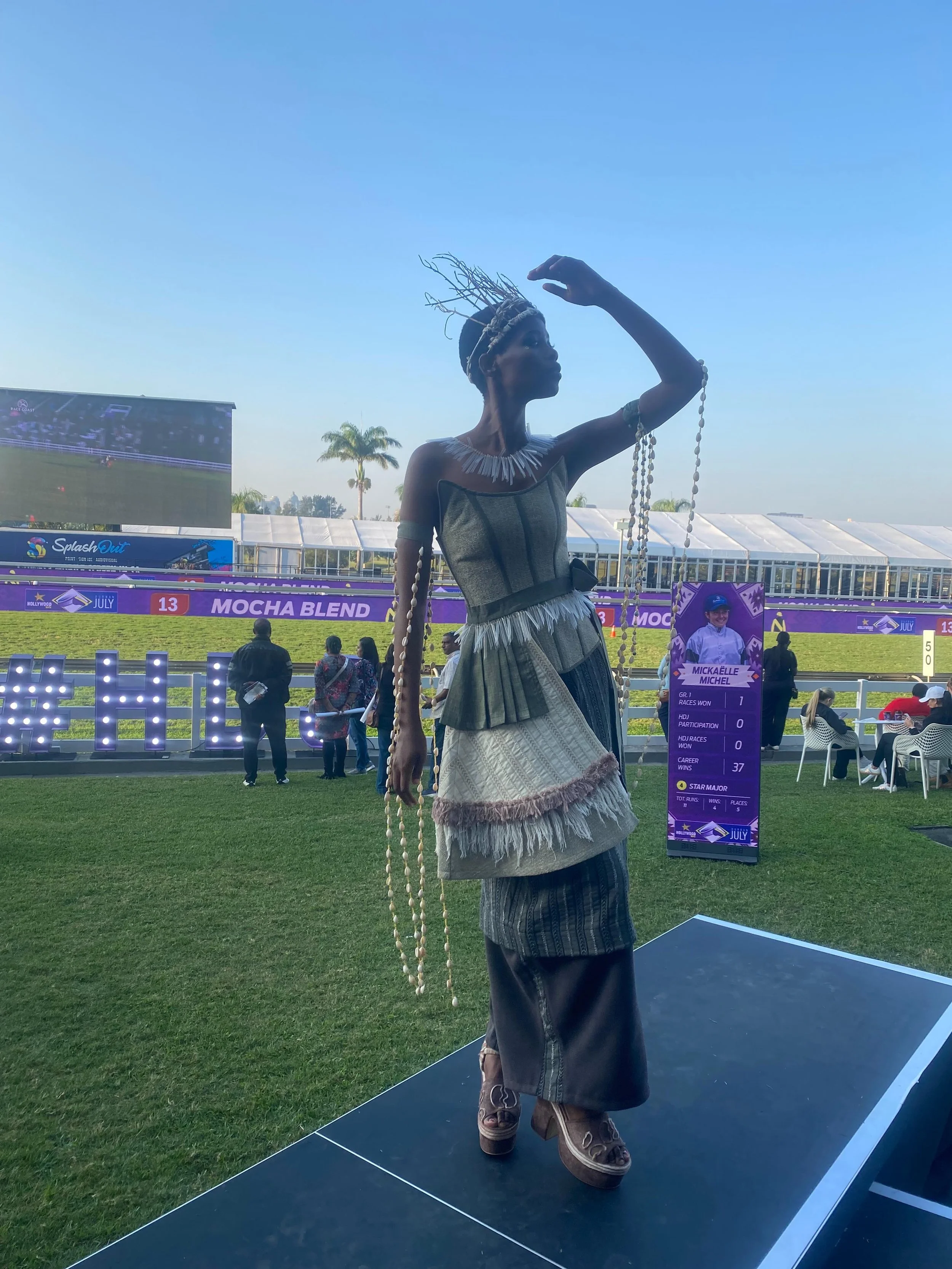
Image courtesy of @thato_selekane
The 2026 theme is a loaded imaginary – imaginary being the set of principles, symbols and conceptualisations through which a society imagines itself. As a theme, “country allure” gestures to the South African landscape as a fitting backdrop for colonial chic. The 2026 young designers defiantly redirected the theme in the conceptualisation and construction of their designs, reframing the relationship to land as an inherited, sustainable practice. Our attention is drawn to fashion as a space where the imaginary meets materiality. Fashion transforms abstract concepts of identity, sustainability and heritage into something palpable.
Across the winning designs, a theme emerges. Local textile heritage is not depicted as something immutable, frozen in time and tinged by the lens of colonial romanticism. Instead, they dare not just to represent local culture but to push the limits of ‘authenticity’ and develop imaginative, original concepts. In their own distinctive voice—or style rather—these young designers reclaim and reinterpret multiple textile heritages to spotlight the aspirations of South Africa's next generation.
The level of excellence these designers bring to the competition refuses to become a ‘tack on’. The horse racing itself (topped with fascinators) risks appearing a vestige of the Queen’s finest export to old-money Natal, especially given the first races were held at Greyville in 1897. The rising designers use the platform to tell their own stories, rebelling against imported traditions, aristocratic activities, and outdated conceptions. The fashion shows rebrand the Durban July as young and up-and-coming, but more importantly, as undeniably local. Without this, it would not be the relevant spectacle it is today.