HEAT Festival Day 4: Ruby Alix, Tessi Nandi & Vuyo Viwe
Photography by Skyla Haley // Sourced from Instagram @ru.alix
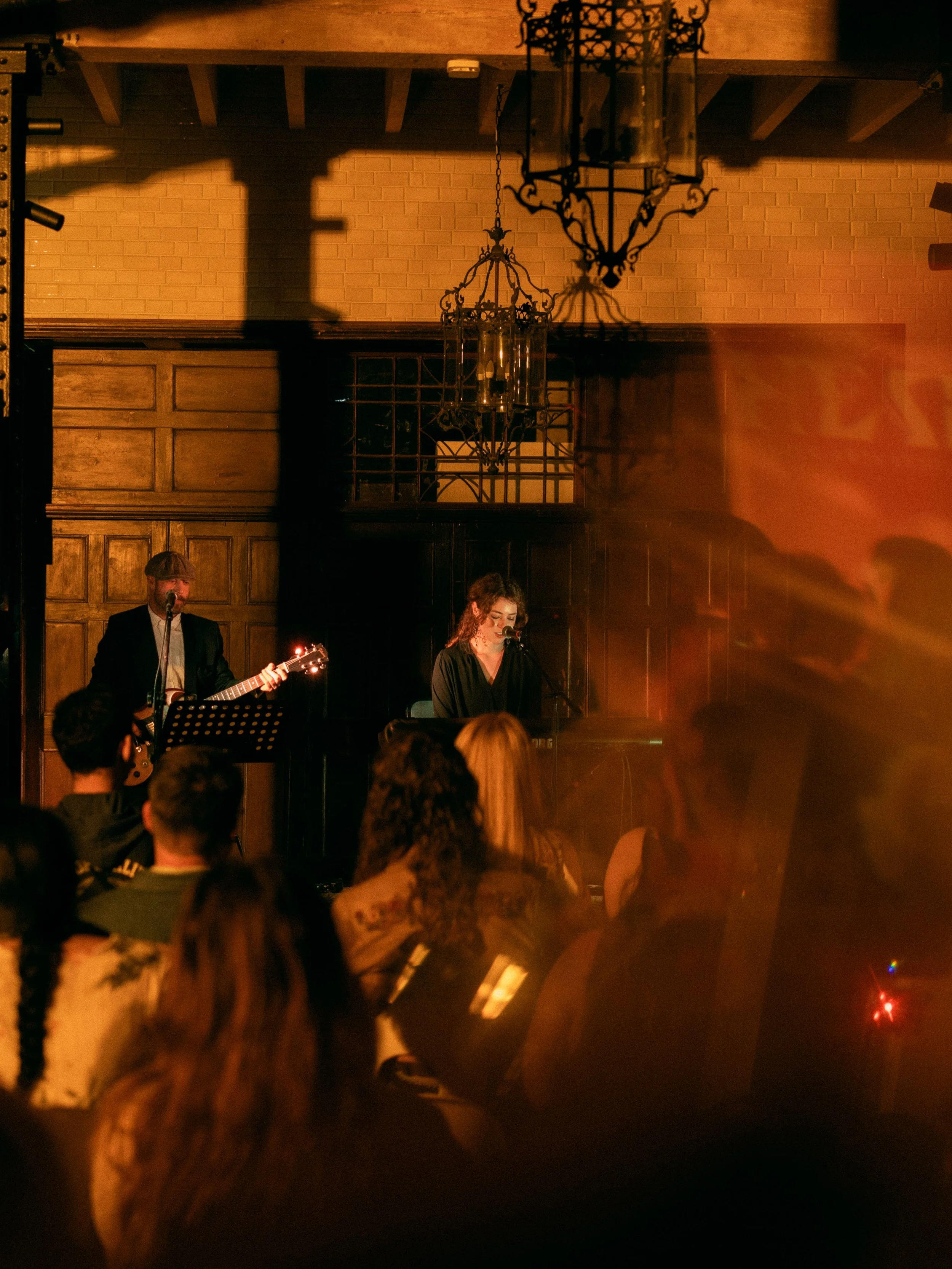
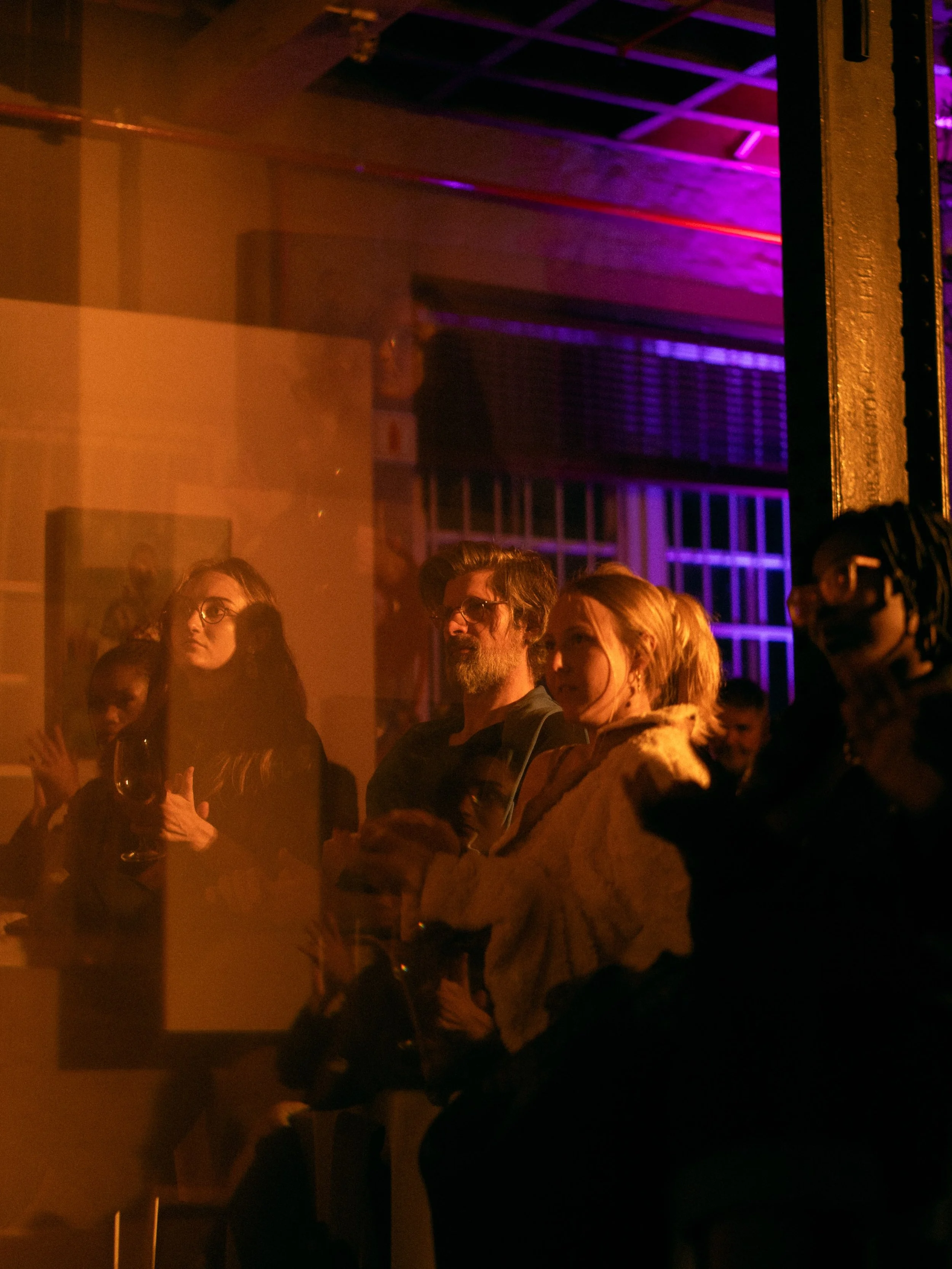
On 13 August, at Union House (Spier Arts), the stage was turned into a kind of altar to those aspects of our lives which are at once most intimately personal, and shared. The all-women line-up comprised an opening set by Ruby Alix, followed by Tessi Nandi, and finally Vuyo Viwe.
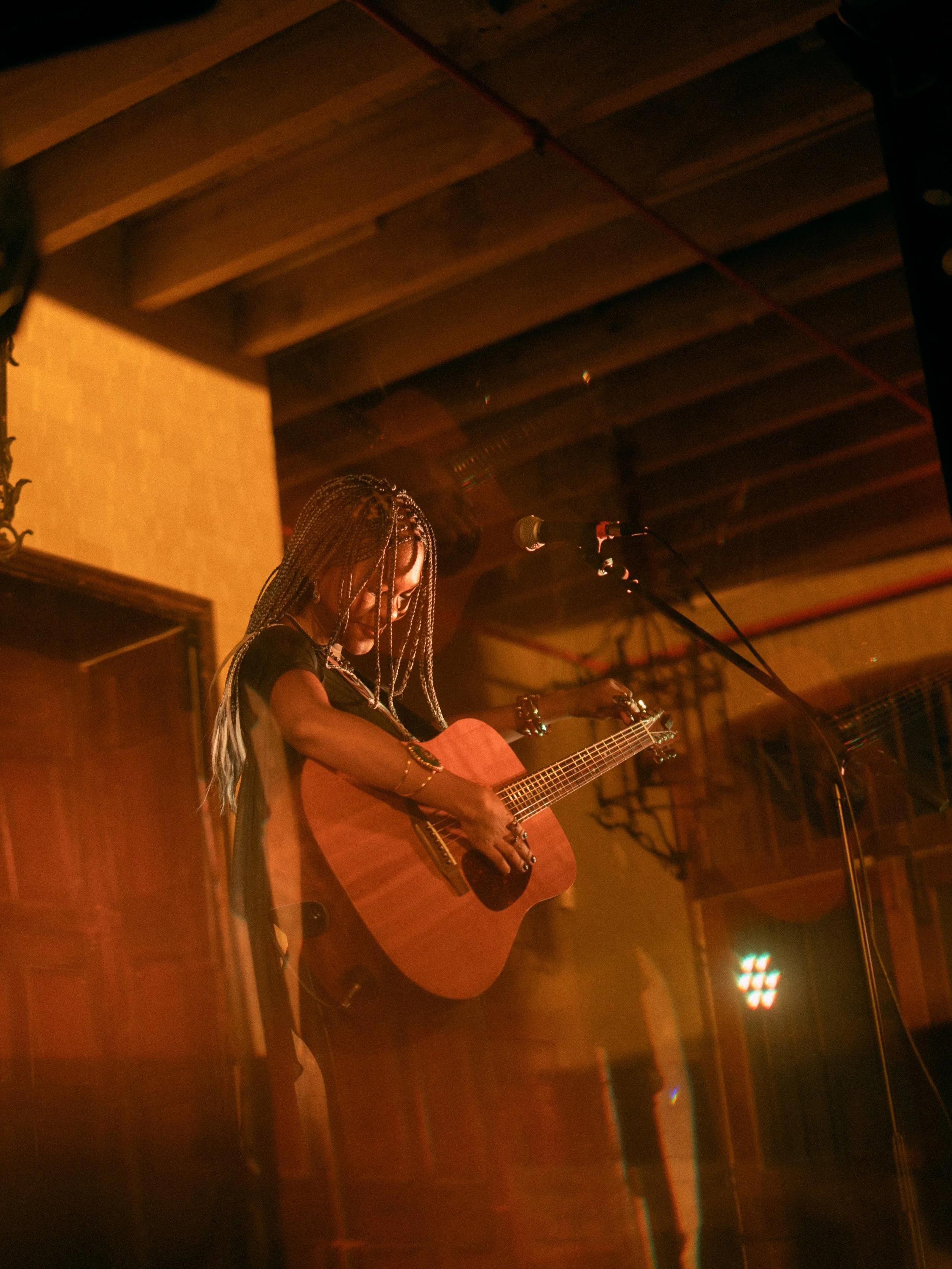
Ruby Alix, Tessi Nandi
While Alix grew up in Cape Town, Nandi was born in Mbombela, Nelspruit. Both artists approach their music-making as a medium through which to explore and express their inner lives. Together on the line-up, they formed a thematic dialogue, tracing experiences of fear, love, loneliness, loss, and hope. Alix’s vocal emotionality and diaristic narrative approach, followed by Nandi’s R&B influences and narrative inquiry along more existentially load-bearing questions, served to invite the audience toward their own introspection, to think about our own relationship to becoming. Together, musically and through playful and engaging rapport, they offered the audience a rich and resonant grounding into the evening
Photography by Skyla Haley // Sourced from Instagram @ru.alix
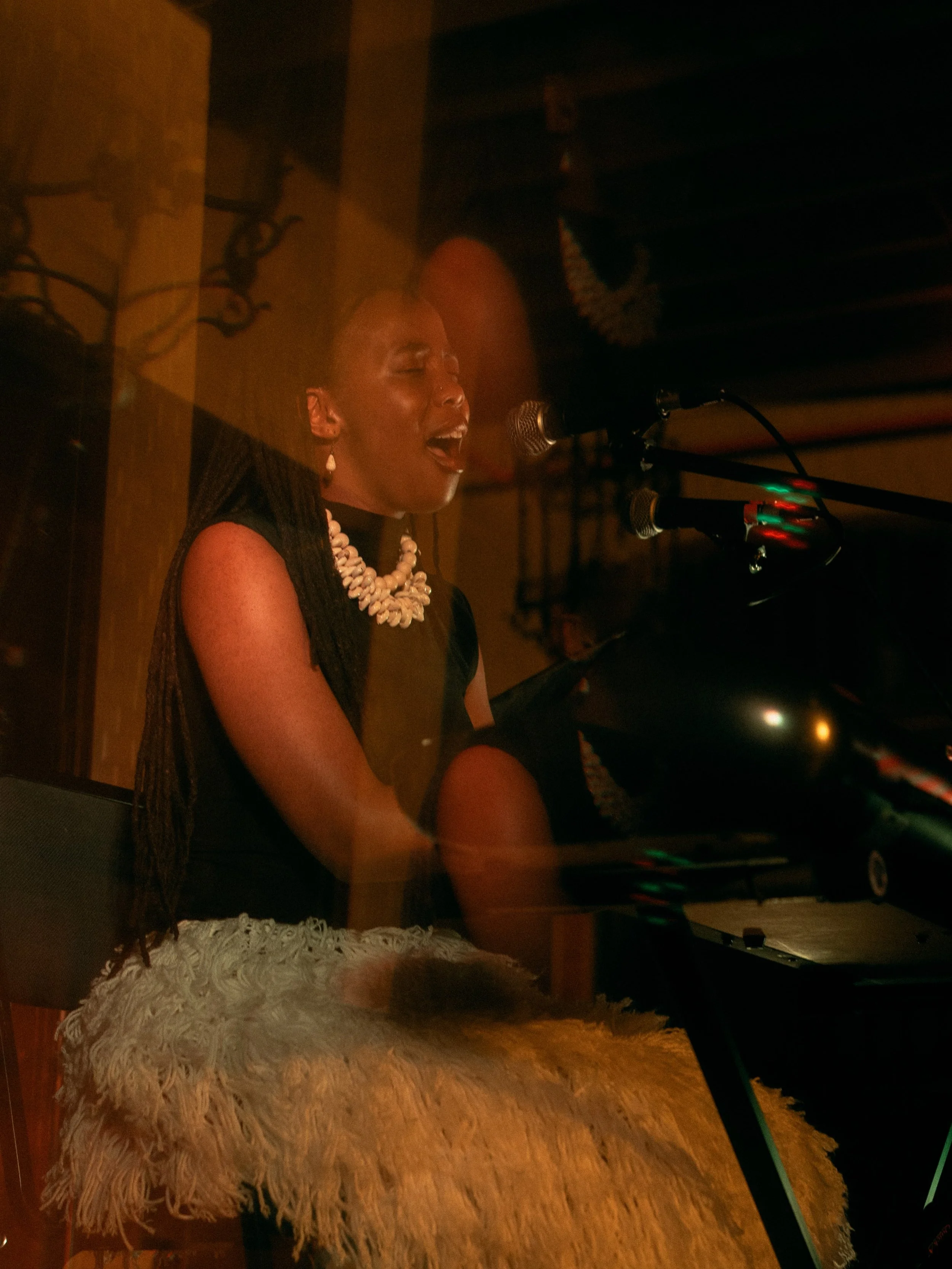
Vuyo Viwe
One does not need to know Viwe’s biography to understand her project, if given the opportunity to experience it. Sound fills the room with immediate plurality. One mouth opening, incredibly, to multiple voices, multiple tonal layers, as if a single sound could present a cross-sectional view of a choral arrangement.
I was reminded of Zanele Muholi’s use of the “they” pronoun, which is to say I found myself thinking of a broader lineage of South African Black art, reaching across mediums toward similar questions of being:
“For Muholi, their use of the pronouns they/them goes beyond gender identity. It acknowledges their ancestors and the many facets of their identity: ‘There are those who came before me who make me.’” (https://www.tate.org.uk/whats-on/tate-modern/zanele-muholi/zanele-muholi)
I was also reminded of the embodiment that is invited, even essential, in the act of performance. The body become the word, taking on the capacity to create meaning beyond “I”, beyond singularity. The body instrument by which I becomes us, by which then and now becomes more, by which here becomes an elsewhere.
Originally from Johannesburg, Viwe has often been described as a “sound healer”, drawing on orchestral folk and South African traditional sonic forms. Only 26 years old, a flautist, vocalist and composer, Viwe has been a distinguished force in the Jazz Scene, previously having shared the stage with the likes of The Brother Moves On, and Internet Athi, as well as performing at Kids Love Jazz, and Umanyano Lwe Jazz. Viwe also holds a Master’s degree in Music Therapy from the University of Pretoria.
Photography by Skyla Haley // Sourced from Instagram @ru.alix
In interview with Hlengiwe Mkwayi (Iqhawe Magazine), Viwe shared:
“I talk about circles a lot. I find circles sacred, inclusive and traditional. I am drawn to how African architecture (kraals, kingdoms), daily occupation (calabashes, drums, meetings), fashion (the lines on umbhaco, the top of ischolo) and social life (choruses, ceremonies, drinking, mourning) and how they all lean on circles and circularity.”
Regarding her relationship to form and notation, she said:
“So even in my creating, I use my voice to sing all the instrument parts before coming back to Western notation/ instruments. In my archiving, I have been playing around with graphic notation, where the music is always represented in a circle and only density is notated, not key or tempo.”
The mouth, the capacious fault point in the individually-bounded body. From this fleshly circle, expanding and contracting, pours a life force and an articulation of what is beyond the knowable and yet felt, and found, as intimately familiar. Ours and un-owned. The movement of the sound is not contained by static prescriptions of time to control progression, but moves by accumulation and complexity.
Listening to Viwe is to return to the river mouth as you become, once again, aware of the life force within and beyond you. Western thinking tends to understand “performance” as akin to falsity but Black studies and Performance theorist Fred Moten reconceptualises performance in terms of social practice- where flesh lives unbounded by individual subjectivity. Viwe conjures such a theoretical insight in real time, allowing audiences to experience this radical sociality:
“the voice, the cry, the crisis of irrepressible “phonic substances”—irreducible to meaning and language—that constitute a history of black experience, literature, and performance from the underside of the Enlightenment. They form an ensemble and epistemology of blackness, of black identity which, Moten says, following Ralph Ellison, is fated to “become one, and yet many.”” (Lippit, 2003)
Photography by Skyla Haley // Sourced from Instagram @ru.alix