Internet Athi x Mishy Kope: Wena, we see you.
Photography by @vuyoposlon of @POLE.studios
There seems to be a moment of reckoning for young artists elizweni. More specifically, a new spring of afro-folk. That profound source of South African storytelling has erupted once more into Gen Z spaces—this time overflowing into streams. Both Internet Athi and Mishy Kope tap into a current of vocalists and writers, the likes of Msaki, Thandiswa Mazwai, Manana, Jabulile Majola and Bongeziwe Mabandla. Given the current support for Mishy Kope and Internet Athi, one can only imagine their promising trajectory when we look to the faithful fan base of Mandisi Dyantis, who plays with the symphony orchestra, big bands and sells out theatres. Internet Athi and Mishy Kope are a sign of the growing space and resources young artists now have to sell out venues, tour nationally, and produce distinctly South African popular music.
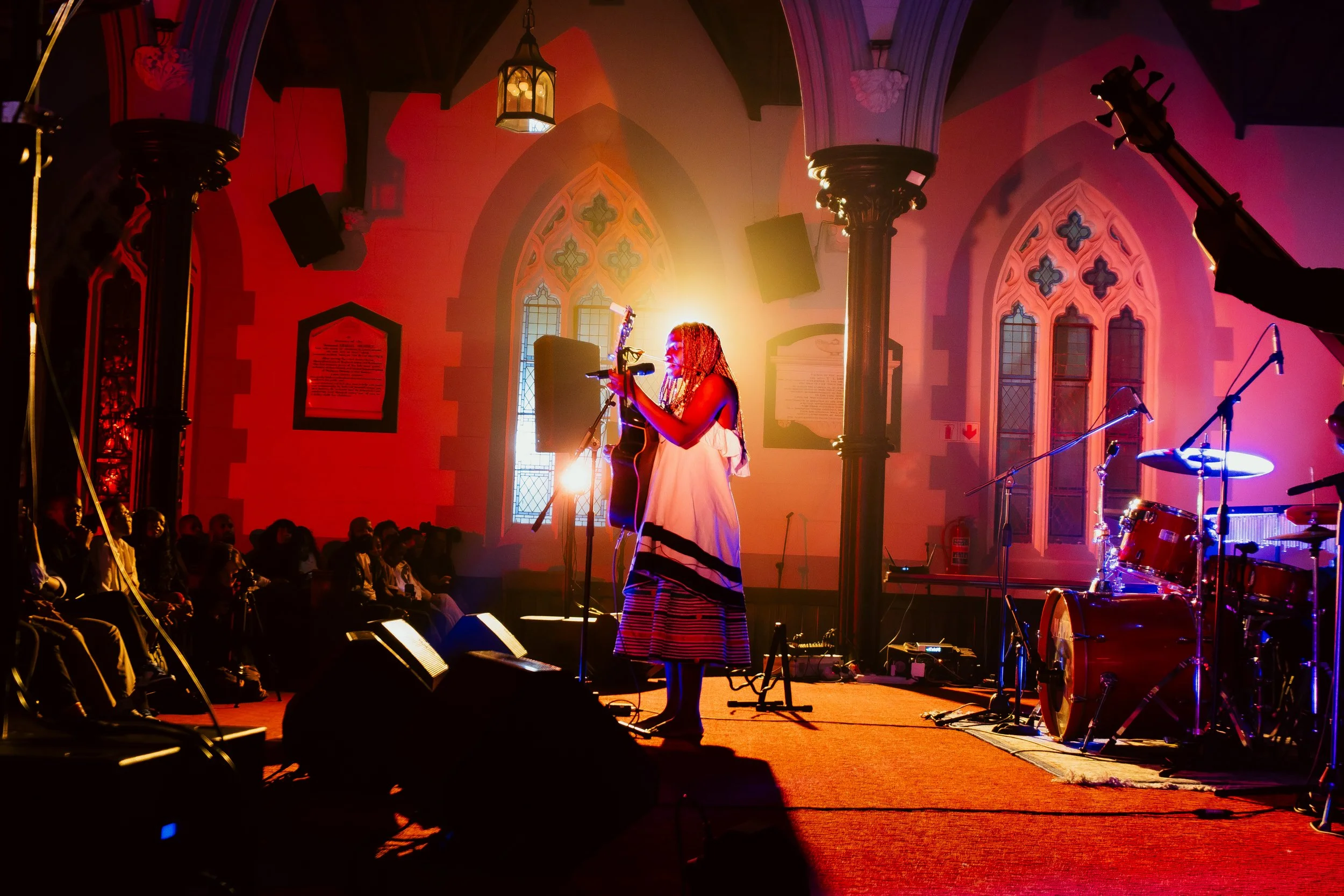
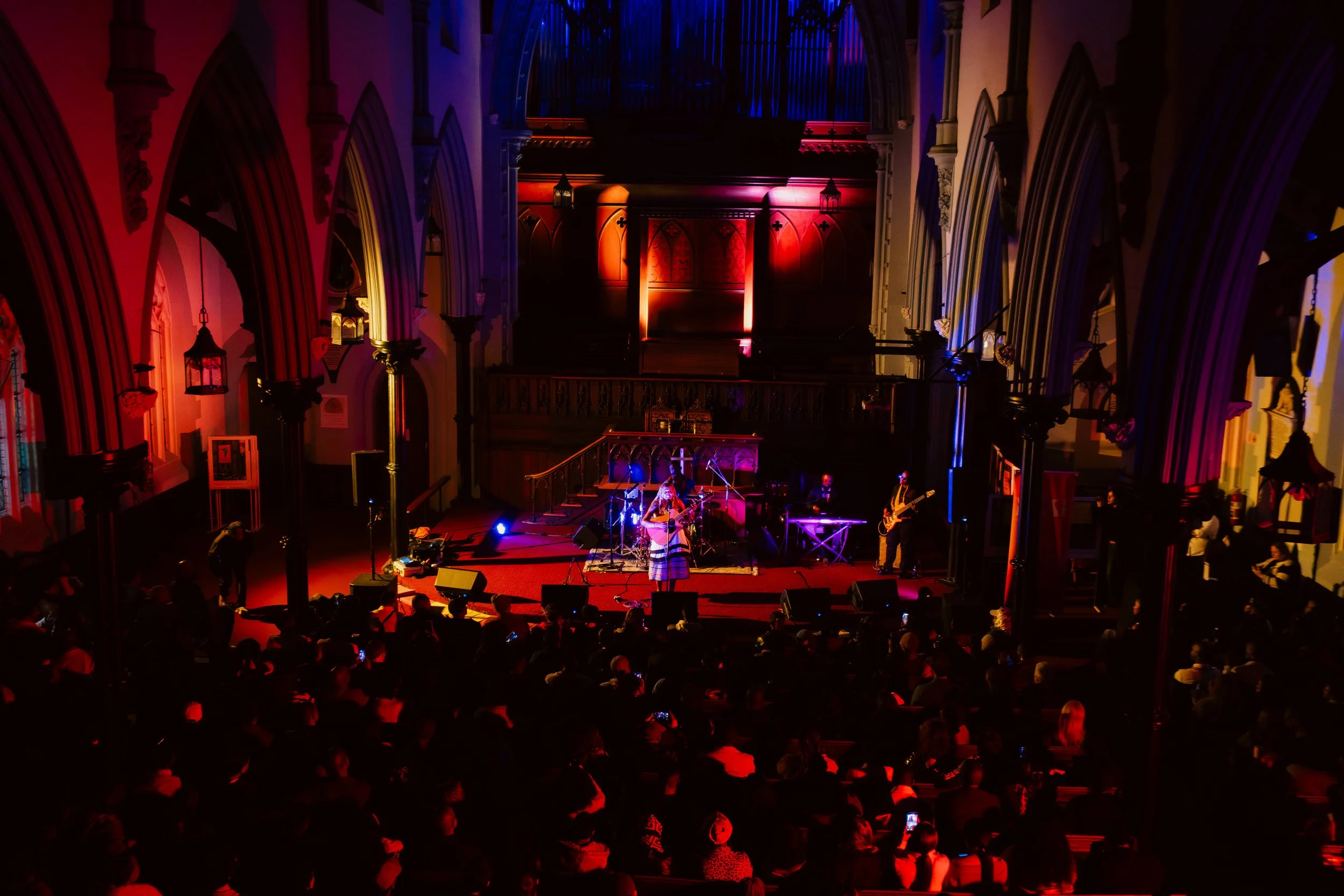
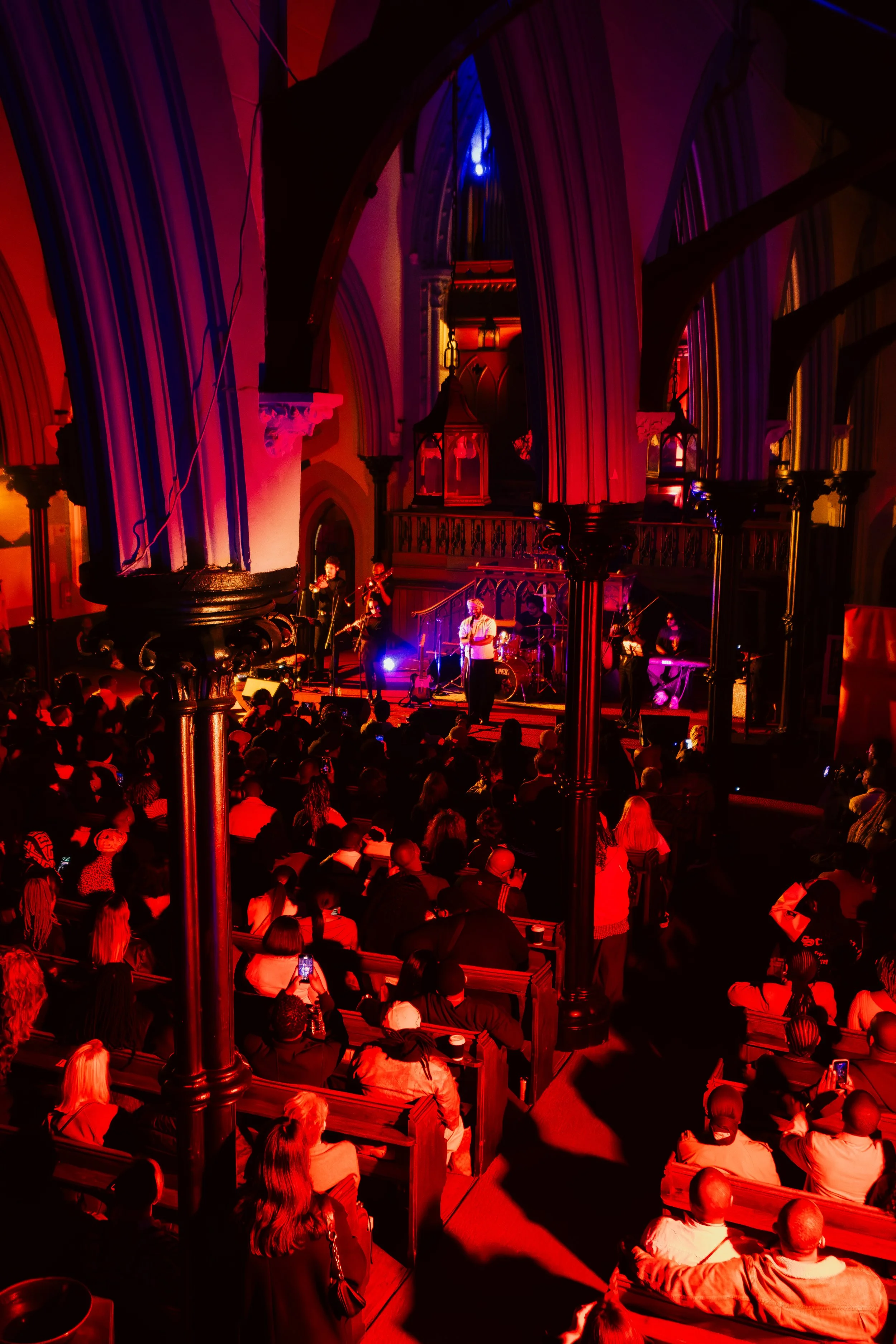
The closing night of the third annual Heat Festival was anointed. Hosted at the Central Methodist Church, this was exactly what the festival is about: pews packed on a crisp winter night, people sipping hot chocolate, couples snuggled up, and strangers sat side-by-side to share in this offering. The collective swaying to singer-songwriter Mishy Kope’s song umntu ngumntu ngabantu perhaps best describes the community in the hall—undoubtedly the most compelling quality of live music. The saying “a person is a person through other people” was embodied in the song’s participatory element. The heterophonic texture relied on the participation of the congregation, and its graininess was produced by the minor variants in how we all sang the same melody. Mishy’s signature whistle carried beautifully in this venue—delicate, but not fragile. Make no mistake, she owned the stage, bantering playfully with the crowd and then stepping back to give the congregation space to tickle the rafters with their voices. This song draws on the compositional quality of isiXhosa, not only for its musicality, but for the conceptual depth. The grammatical interconnection itself reinforces the meaning of ubu-ntu (an unfolding being and becoming human) through others. Whilst the lyrics might not speak to identity overtly, they enact it by invoking a greater cosmology that resonates with the congregation.
Photography by @vuyoposlon of @POLE.studios
Mishy found her sound in school choral and church music, two proud musical traditions often associated with her home province of the Eastern Cape. Both are known for localisation, reshaping Western hymnody through isiXhosa musical sensibilities, including layered vocal harmonies drawn from polyphonic traditions. The significance of the setting in the historic Central Methodist Church was not lost on me... Perhaps it’s what made the gospel tinge of the bass fills more pronounced.
“Mama” continued with a focus on Mishy’s voice, complemented by sparse decoration by keys and guitar. The bridge, "xola intliziyo yam," built layers through soft repetition by the congregation until Mishy conducted us into the main refrain, our voices overlapping with hers. Satisfied, she nodded, and the drums kicked off the main chorus. The congregation’s confidence rose with the rhythm. Now in a flow state, the cyclical form created the space for the congregation to harmonise freely.
Then came a treat: Mishy’s new single yimpi engapheliyo, hot off the music video drop. It’s fresh. A new direction? The Quiet Life team, who also curated Heat Festival's music, produced the video. Her video is a good example of how she has carefully crafted the iconography of her artistry to reflect the complexities of ‘coming-of-age’ in the born free nation. Her stage image reflects this, appearing recently in looks that express pride in cultural heritage. That night and at routes of sound, there was a freedom in how she danced barefoot as the crowd chanted her song and cheered her on. She revelled in it. Spontaneously, Mishy broke free of the stage—an ethereal vision running between the pews in white that winter night.
The call-and-response chorus leaned into prosody, where each syllable became a percussive beat ("en-ga-phe-li-yo"), almost as a war cry. Described as the “never-ending war,” this could signal Mishy’s expansion from storytelling into activism, following lyricists like Thandiswa who link everyday life to social issues. Indeed, the energy of the song matched her electric energy (and attitude) as a performer! Back in front of the organs, she threw her arms up, fists clenched, cutting off the song.
As his namesake prophesied, Internet Athi is popular. It’s one of those inescapable names in the Cape Town, if not JHB, scene. Any unbaptised listener realised immediately: before the smoke even settled on the stage, the phones were already out videoing. A rousing cheer erupted. Hands waved. Covered mouths. Fists clutched to chests. By all means, the presence of a pop star. Internet Athi has become synonymous with the stylings of the emerging cosmopolitan cool kids, matched by his magentic charisma as a performer. His reputation precedes him — but does his voice?
The best parts of his set were gospel-gilded in a Daniel Caesar way. The “polymorphism” message is conceptually dense in a case-study-big-word way; yet simultaneously so simple. It touched every member of the congregation: so vulnerable and personal, it was deeply confessional, and yet transcendental.
Photography by Caitlin Honeywell
Much of the jazzy aesthetic came from his impressive ensemble of musicians, mostly formally trained musos drawn from other recognisable projects. In the pulpit were Keegan Steenkamp on trumpet, Mthimkhulu Stuurman on trombone, and Carla Nicholson on flute. Timothy Fortes, as a well-seasoned deacon of the drums, formed the foundation of the project’s versatility with just about any groove. Pastor Vuyo Nkasawe was on keys and Tiana Amari two for two on bass. These neo-soul, jazz leanings were complemented by a touch of class(ical) with another SACM alumnus, Edward Fungayi on violin. It was a recipe for success: the soulful vocals in isiXhosa and the ‘live’ instrumentation that young SA music-goers can’t get enough of. These transformations are keeping live band music cool, albeit in a newer, R&B-coated form.
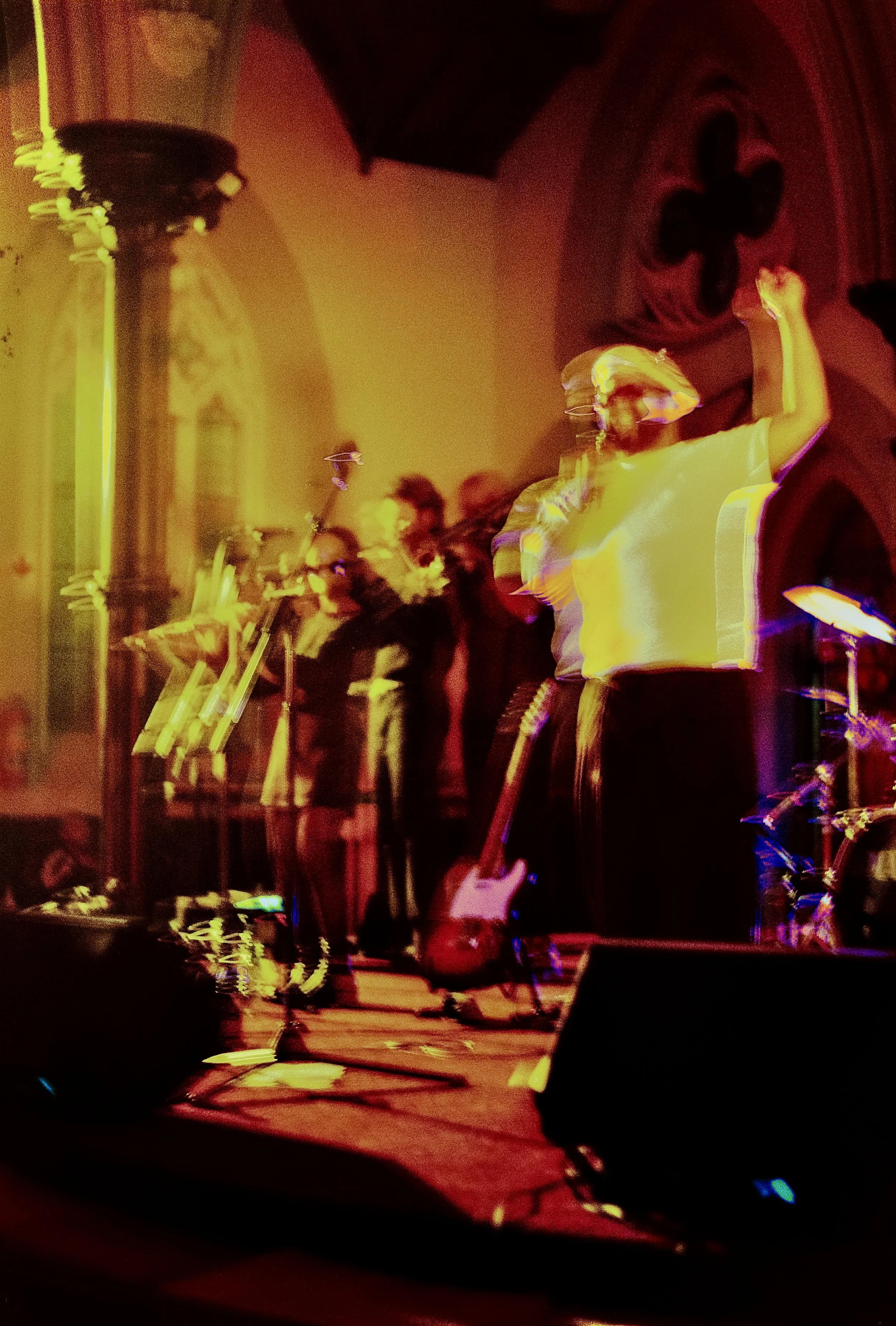
“We’re gonna sing our hearts out now,” Internet Athi kicked off the set—and there was plenty of heart in the tender delivery of the vocals. He wielded his charm, teasing the crowd, who taunted him back, shouting “c’mon now!!!” The songs’ forms have been adapted for the show, drawing them out, slowing them down, enabling spontaneous flights of fancy vocals for Athi. But he also portrayed humility, often stepping aside, beret bowed, to spotlight his band.
As promised, the ‘bangers’ arrived with Mna. As all the kids who love jazz know, singable horn lines are it. Listeners who heard hints of Kujenga wouldn’t be wrong. Athi did work with them in the early days of his project. He took it a step further—adding more colour with violin and flute. The congregation knew the phrasing. That breath before “elizweni.” The motif of the key phrase was a masterclass in repetition with variation. I really enjoyed the arrangement. The horns came in to build anticipation– then suddenly, a shift in timing signaled the chorus. Athi flexed his expressive vocal runs, as the audience swooned over the vibrato when he sang “andinal'igamaaaaaa.” The song was self-defining. Speaking to one's place ‘in the country’, the lyrics captured this existential moment, asking what born-frees inherit if not a name nor land in the country of their birth? What legacy will they leave? Both personal and political, it transformed the music into a form of laying claim, and asserting belonging.
The next song faded in with a shimmer. Vuyo’s keys gave an immediate ballad feel. The cheeky wordplay got girls wishing they were either Thembisile or made a certain promise... After the intro, a pause. The suspense made it all the more sweet. Once more, the horn lines didn’t disappoint. The crowd sang out every lyric of the first lines too. “Undithembisile uthando lwako,” Internet Athi called out longingly. This yearning was carried over into Carla’s breathless solo on the flute. Athi cut the band down to just the horns. On his command, they repeated the line and we all belted it out, nearly drowning them out.
A tease of the trumpet motif was all we needed to recognise khawuphinde uzame nanamhlanje. Internet Athi divided the room into thirds, tuning each section like a choir master before bringing the band back in. Given how much the crowd was loving it, he let the usual three-minute song stretch out, looping the wave of voices he'd orchestrated. It’s the feel-good song we all needed. “It means try again. That’s what we were born to do.” Athi told us. “In your small corner every day, God will find you there. Your ancestors will find you there. I’m not a preacher. I’m no preacher. I’m no sage; but if you try, something beautiful happens.” There was a reverent aura that settled like a mist across the room.
Photography by @vuyoposlon of @POLE.studios
There’s music in the air, to borrow from the great Mam’ Letta Mbulu. The complex lineages of music, politics, and the childhood experience of a young democracy inform the songs and sounds of Mishy Kope and Internet Athi. Their lyrics resonate deeply with our generation’s experience, whilst their melodies are irresistible and instantly recognisable. In this incredible moment for local artists and music-goers alike, performances feel like preaching to the choir– in the best way. There’s something in this music that says wena, we see you.