Chaylon J, the man of many sorrows
I have to start off with an apology - this article is long overdue.
Back in the peak of my activity at VERVE last year, I racked up a bunch of interviews back to back and some of them slipped through the cracks - this being one of them (and there are a few more I still have to get to)
That being said, let me transport you guys back to April of 2025. I had just published the Nexa interview, had just interviewed interviewed Vriety, and they both insisted that I interview Chaylon J.
My only context at this point was Chaylon’s features on their work - and then Good Mourning dropped. That project alone should have clued me in to the type of person that Chaylon J is. Humble, soft-spoken, but a man that explores inner worlds through his words and his art. A man of many sorrows.
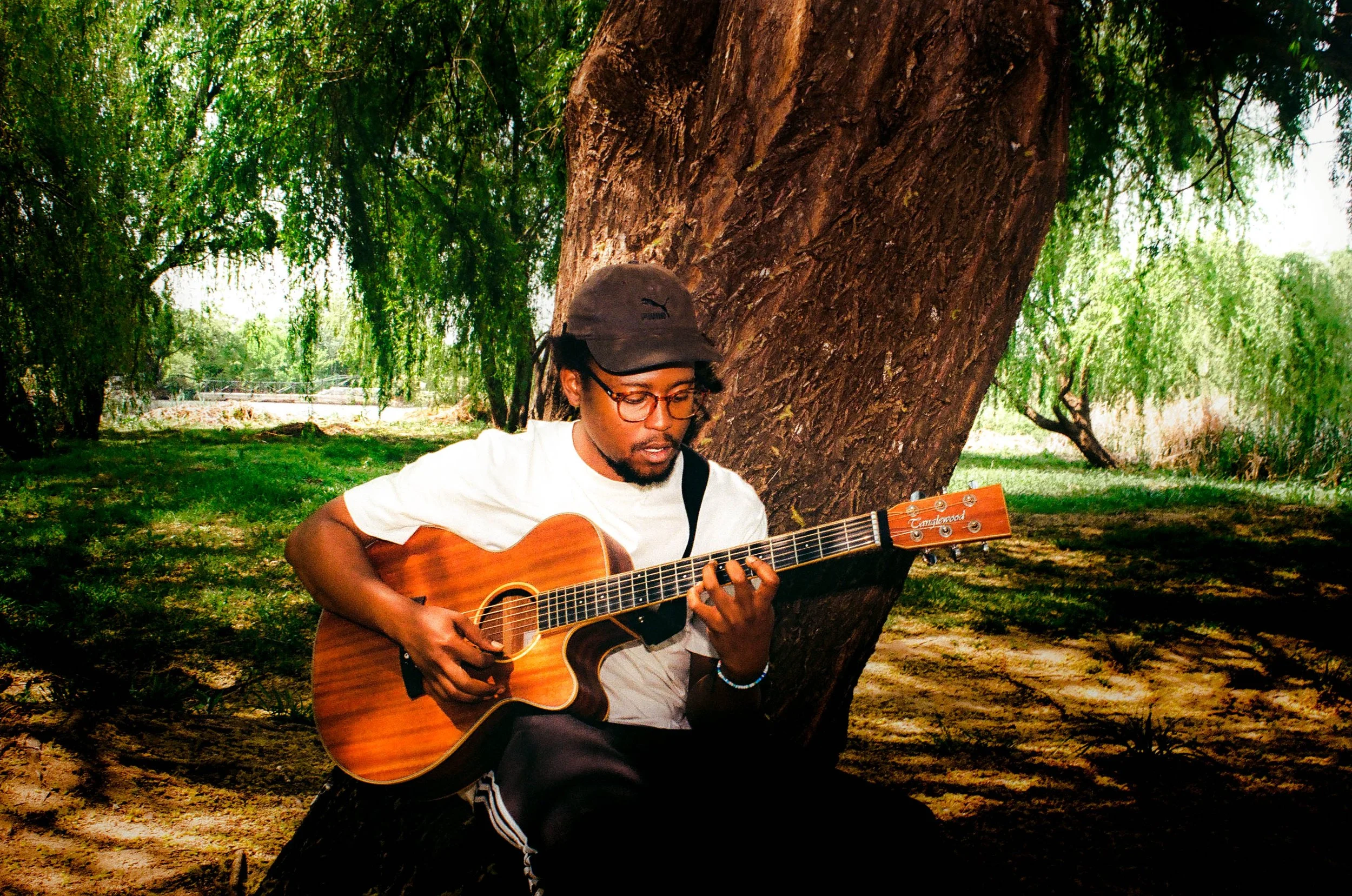
So, Chaylon J. You’ve described yourself as a man of many sorrows. What do you mean by that?
That I just have a lot of things that make me sad. I don't mean sad as in like immobile - I mean, like, things I have a lot of things that concern me, in the world.
In one of the songs off my album I say something like “What does it take to have it all be whole again?” I think that's that's the thing. It's like there's a space that is a hole, and no matter what you try and fill it with, it doesn't fill. So then everything you try to fill it with becomes a “sorrow”.
I think the more you know about something, the more you realise that you don't know and that kind of makes you sad. You realise that “I have one life and I'm never going to figure out what this thing is”, and that's the sorrow for me.
It's just, there's a lot of things that I wish I could heal. There's a lot of things inside and out that I wish I could change, that I can't.
You first picked up a guitar when you were 16 and eventually got to writing what would become your debut album two to three years ago. What is it like now that the album is out? And secondly what is it like for you moving as an independent artist in this industry which has no time or recognition for artists like you?
I thought I'd have this revelation when it came out. But now it's just about like ‘okay, where are the ISRC codes? Where is the music living? Is there a profile or picture on Apple Music?”I realised that I should have done more admin before dropping the album, actually. I should have maybe done more promotional work.
The album is out, but it still feels like it's not because there’s nothing I can do to push it.
Sometimes I'm like, yeah, “I don't push it, but they’ll see it if they see it - they won't if they won't”. But there are like 150,000 songs uploaded every day on Spotify so I have to do something to make it get seen.
It's hard, but I try not to take it personal when people don't get it, especially because I've covered it on purpose. There's things that I'm talking about which I've hidden for a reason. So I can't be upset that no one gets it.
I could be speaking out of turn, but I haven't heard much of this kind of music coming out from this side. I've heard alternative guitar music, but the way my stuff sounds in the direction it's pushing is still very fresh. So it's not the kind of music you put on to like chill with homies and say “let's listen to this” - you listen to it by yourself.
So I don't find it surprising that it's not commercially viable, that people aren't flocking to sign me because of course not. I just try to keep a cool head and I'm grateful for my collaborators because they get me into rooms and places that I wouldn't have gotten otherwise.
When I first performed it live at Sonic Sessions, folks came to me afterwards. Vriety played their set first , Nexa afterwards and I was accompanying them both. I just looked like an oke that was there. When I laid my set down everyone was like “oh, dude, like I didn't expect that from you” because I was like, distorting my guitar. I was basically being a rock star.
So I think this music translates better once you've seen it in real life and had a conversation. That's why I realised the importance of performing live. That’s when I was like “Okay, instead of buying Instagram ads, I should just play a lot of shows.”
To be fair I'm not in the industry to be seen, which sounds like an juxtaposition - you're putting the stuff out to the world, so of course you want to be seen, right? I have no desire to - let me not say no desire - very little desire to be acknowledged at this point.
So I kind of lose perspective on what I'm doing because I'm trying to do it. It’s too early now to expect people to care about what I'm doing.
The industry might be a dog eat dog world, but I’m a cat I guess. Y’all eat each other, I’m chilling.
That makes me think of something an artist said recently in an interview when asked about the local music scene - that there’s an “Old Cape Town” and a “New Cape Town”. And it's not that the two are at war, it's just that the old way of things isn't really making space for the new. So the new is just doing their own thing, building their own communities, moving forward at their own pace.
Again, it's not to disrespect the value of exposure or like people appreciating your work. Obviously, it's nice to have work appreciated, but I don't think I make the work with that in mind.
I didn’t even know I was making an album. How on earth am I going to afterwards be like, yeah, well, listen to it.
I’ve even had people over the past 4 or 5 years that I was making this album say “oh, I can't wait for it to drop.” And when it came out, it's like I didn't even exist.
That pulled me to myself and had me think “Yeah people just say stuff.” And it's okay, like we’re all human, in the sense that a lot of us don't even know what we mean when we say what we say. And I don't mean that I'm to say any different… not that we don’t understand it, but rather that we don't perceive the depth of what we're saying.
I'm really into that. I'm really into uncovering why I feel what I feel, why it makes me feel a certain way. Like the mourning, sitting in the sadness. Or just crying and then afterwards, wiping the tears away and moving. Yeah, so again, if it's about people, it's about the people I'm building with. The people I'm building for will find it.
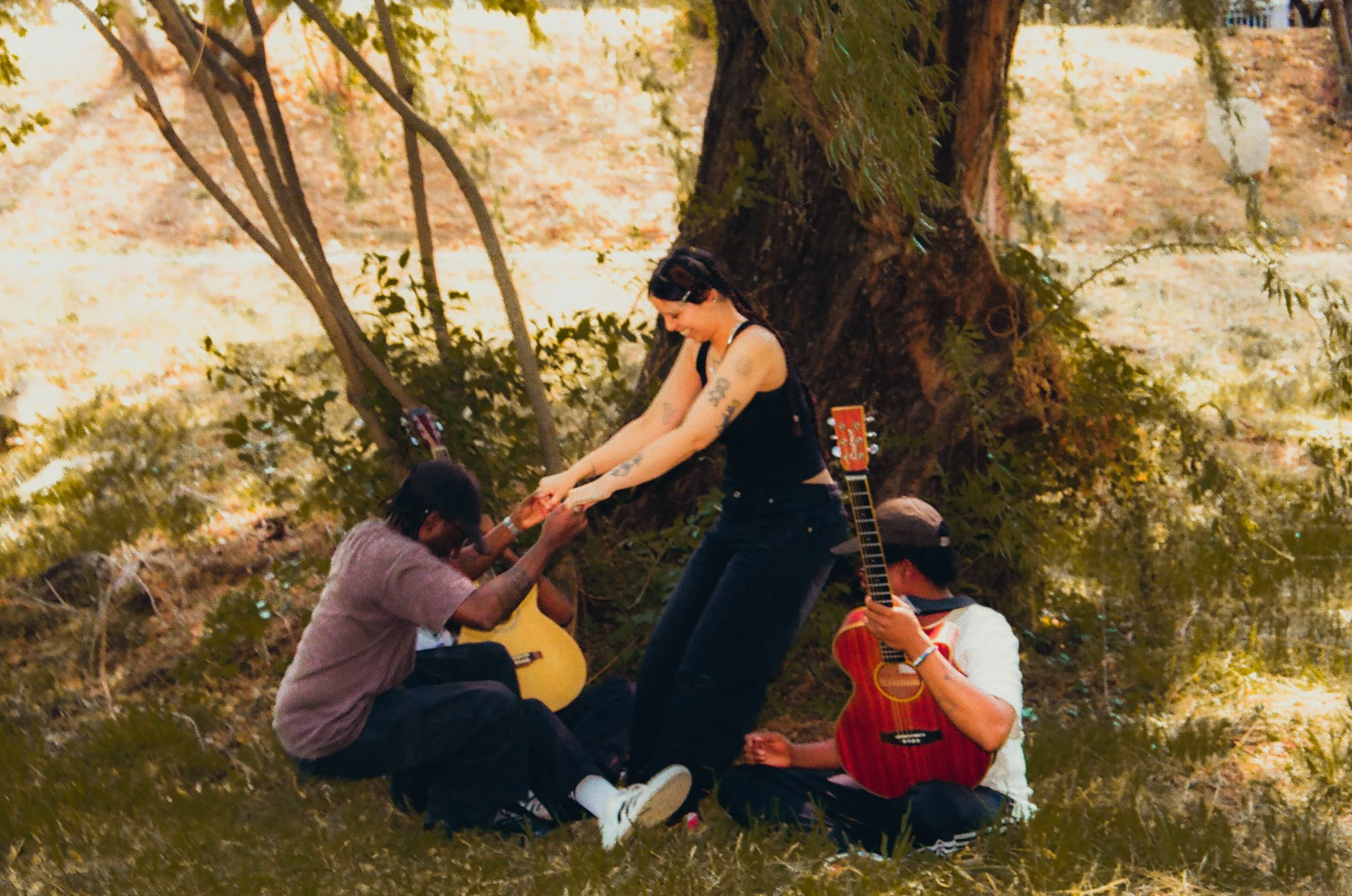
So you tell me about the people you're building with - Tell me about LABLE.
LABLE is made up of some of the most interesting individuals I've made in the world. When I say interesting, I mean like - I never thought I'd be surrounded by people like this. I always thought I was like, the way I am and no one's like me. And I know that comes across as, “Oh, I'm so deep and everyone's so shallow.”
I used to be against collaboration. And when I say against, I mean I never looked for it because I knew what it was like, I've tried it. I've tried collaborating with artists.
The way I saw the world and what they were doing it for wasn't the same. It's almost like I’m tryna do art for art’s sake and you’re tryna sell art. You know?
Both parties must either make art for art's sake or both want to sell art for it to go somewhere. And then these folks, the homies from LABLE, came along and they were on the same vibe. They just wanted to make art.
They’ll be like “I have something. Do you want to do something with this?” With Vriety, we’ll just smoke a joint and just talk about existence and God and cognitive dissonance and then out of that we’ll make a song. I really appreciate that because I'm not the kind of person to set things up, I'm very terrible at planning. I just like conceptualising the thing and making it happen. But I'm very good at following a thread.
Even though I don't plan to do something, when I notice something's happening, I see it through. Nexa is really, really great at organising things. Vriety is very, very good at questioning things like “ if this is working, what about this?” And I'm just like I'm just like, yeah - so it happens by itself.
Again, it's so cool how it happened because we never sat down and said, hey, guys, are we doing this? It was more just things kept happening and we went through to support each other and after weeks passed we said “okay, we've been playing together as a unit. I guess we should make a WhatsApp group now.” you know?
So yeah, the people I'm building with are in it for the right reasons. and it's been such a privilege to be able to create with it because we all look at this thing as beyond us. We understand that this act of creativity isn't something that we do. It's something that gets done.
So yeah, I really love those folks. They really, they open my mind. They pulled me out of my shell. I was just a studio rat - up until the early hours of the morning recording, not knowing what I was making. No one's going to listen to the stuff.
It’s because of Vriety that I put the album out. “Good Mourning” wouldn't have been out unless I had the homies on my neck. Because I'm very critical about things. I overanalyse.
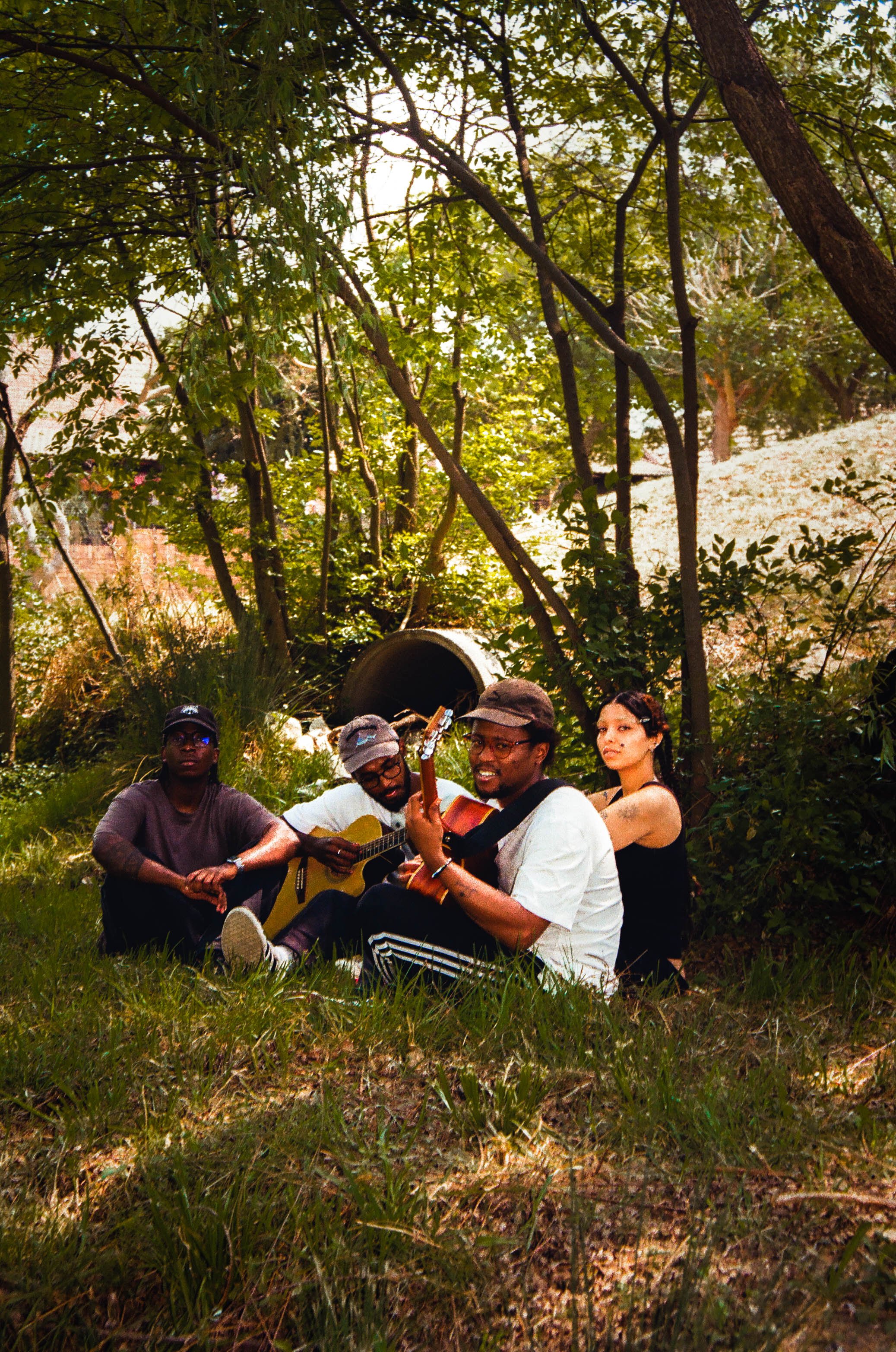
It was such an adventure finding out about all of you. From hearing Nexa’s single Holdfast, to finding Vriety and exploring his work, and then finding you - I felt like Hansel and Gretel picking up the breadcrumbs. I haven't delved that deep in a while. It reminded me of the early 2010s, when I was exploring Childish Gambino’s ‘Because the Internet’ universe.
But that’s how I feel about what VERVE is doing. And again, I don't want a slight folks that do this, but there's so much emphasis on, okay, we must also join this thing and also do that trend and then everyone's like, okay, cool, this is how we're going to advertise our business. Which eventually grows stale and tired because every company's doing the same thing.
Yeah, as much as the internet is a wonderful creation and as much as, you know, the social media landscape makes us connect, that isn't what this is. Word of mouth.
Even social media is still a form of word of mouth because you help share the thing. I think that people are tired of being told what to listen to. People are tough.
I'd rather listen to what you listen to because you enjoy it. And I think that’s what this is. It's really, really cool. So yeah, man, it's just getting started.
At the end of the day people are tired of getting force-fed and overwhelmed by the algorithm. I think people are looking for curation - and that’s why we do what we do.
And I think that leans into the idea of authenticity. I really feel like we're on the cusp of authenticity being the next marketable thing.
And I think this music is that's why I'm so confident to put it out into the world - I don't expect people to get this music this year or even next year.
I think by the time I'm on the third or fourth album, they're going to be like, ‘oh daaammn’.
If you mean it, it will have meaning. I promise you. And it's hard, I won’t lie. Even I get caught up in the numbers. I check my plays every now and then - I'm a human being, I doubt myself. But then I remind myself to be glad that I’m obscure, because the day that people know who you are, you can't back out.
So, I'm enjoying just being a fly in the wall, watching my homies prosper. And it's an honour to be a part of that.
The focus for me is just to be able to share authentically with those people who pay attention.
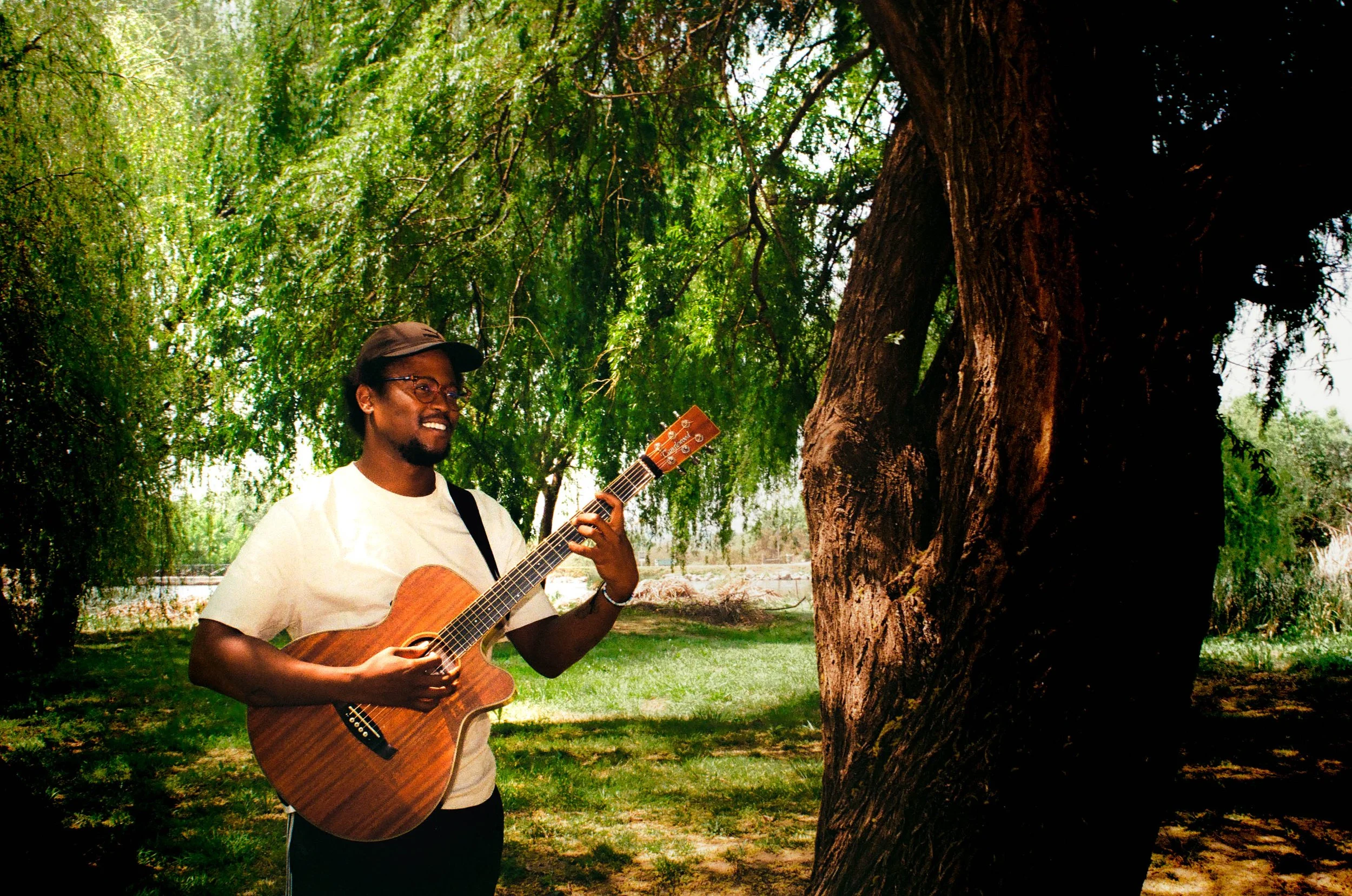
For the last question, this is the big VERVE question that we like to ask - but this time from a Jozi lens. What is your opinion of the current cultural landscape of the city that you're in and where do you see it going from here?
I think the current landscape in Jozi is a very good one in the sense that everyone's making stuff. Everyone's cooking here.
I do I think it could be a bit more open. Like, it's a bit cliquey - it's difficult to not be cliquey. That's the one thing I would change about it - and I know that wasn't the question.
But I love the fact that people create, and I understand why you'd want to keep it like this, because I mean, you’re precious about creations.
Where do I see it going? I see it becoming open. I see us all being more prone to working with people that they maybe wouldn't have before.
I see it being an open playing field where everyone has a right to be here, whether or not you know the other homie. I feel like the more open something is, the more it can grow.
Is there anything else that you would like to mention that we haven't already touched on?
I think I’d say that if you're gonna listen to the music, listen closely. And then listen again. It's not what's on the surface. If you hear words on the surface, try and hear how they bleed into each other and maybe hear another word.
For instance, if I can make an example?
“I sat beneath the pouring rain, put on my shoes and drew my cane” - in that rhyme I said a name. I said the name Andrew, and you didn't listen, you didn't hear that.
So if you can get used to words piggybacking off of each other to make other words, you might just hear what I'm talking about. Because it's very real stuff. I'm talking about the cosmic conflict and the human experience - through my lens which isn't necessarily important, but it's valuable because I'm a human.
So what I'm saying is if there's a song and it sounds like I'm singing about a girl, I'm probably not.
I don't know if that answered the question, but anything we didn't touch on is that I’m probably a thinker first and then a musician after.
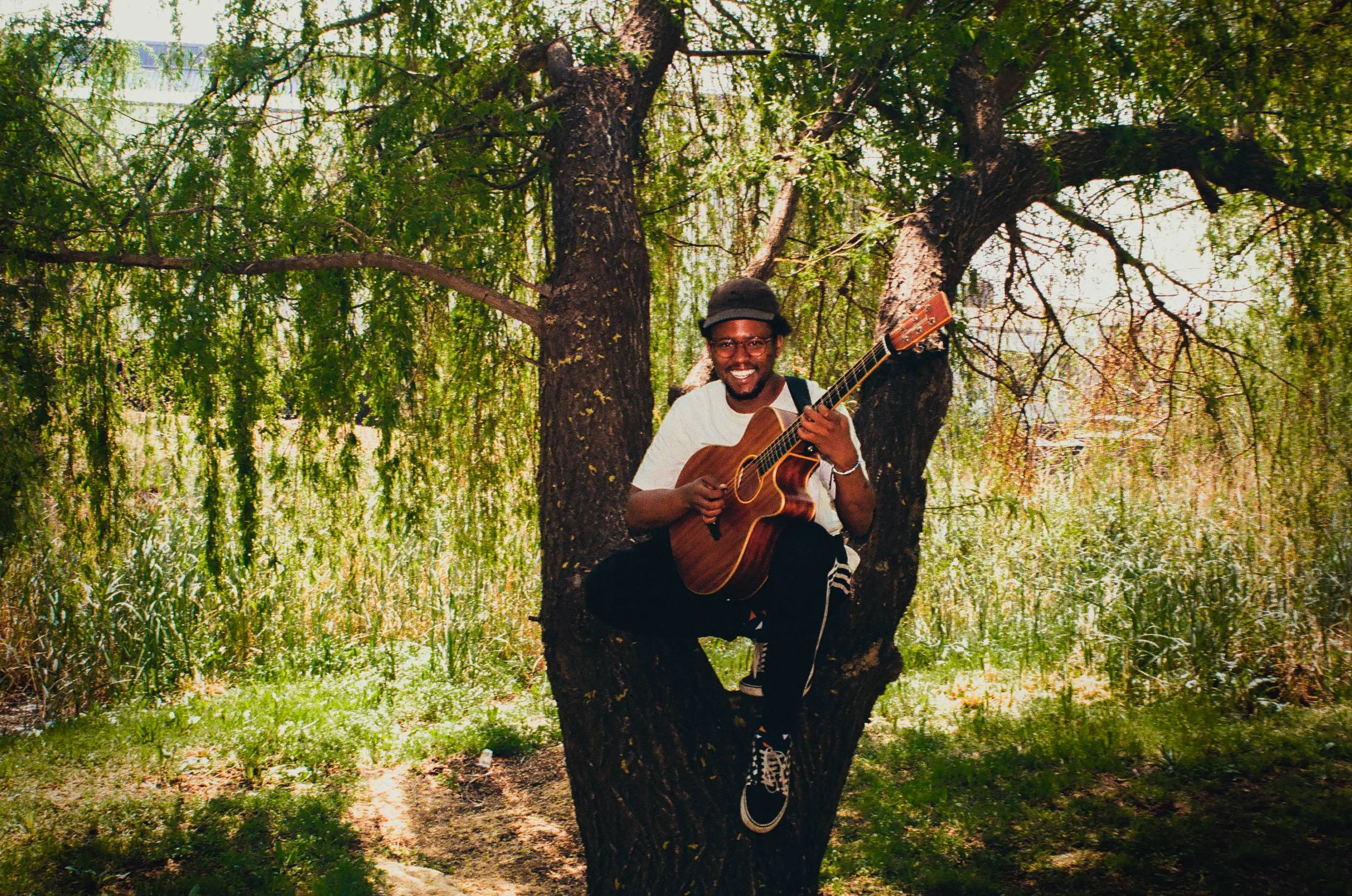
Chaylon’s melodies are ethereal and his vocals are haunting, but the conversation with him left me thinking. I had to go back to ‘Good Mourning and listen again, but this time actually pay attention. What are my sorrows? What are yours?
Keep a close eye on Chalyon, and on LABLE. And if you are lucky enough to, catch them live at their next gig. I know I would love to.